Continuous Screening Machine: How to Solve Screen Blinding and Increase Throughput
Thursday July-16 2026 13:43:32
In modern continuous production processes, the screening stage is fundamental to the efficiency of the entire line. However, screen blinding and material pegging not only cause a decrease in throughput but also lead to frequent unplanned downtime, resulting in significant time and labor costs for the enterprise.
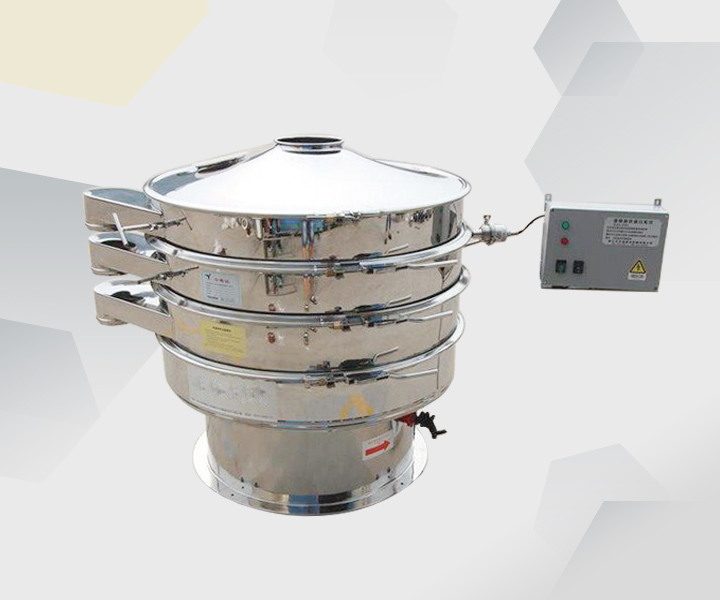
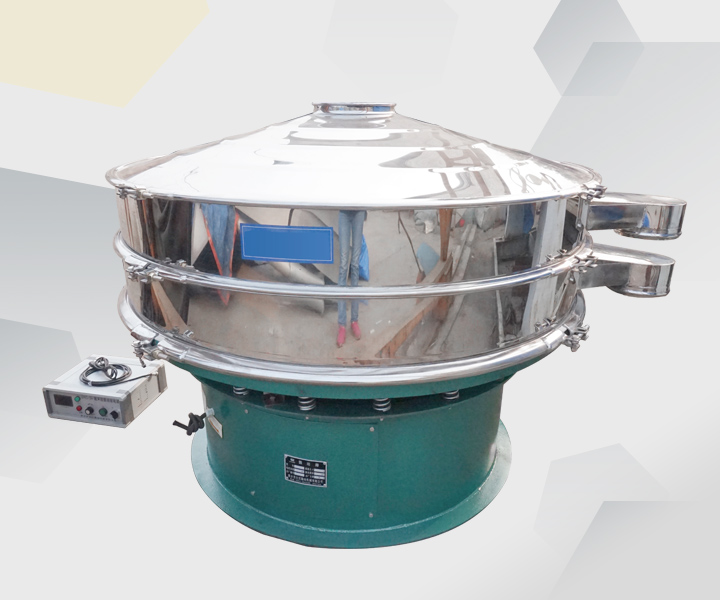
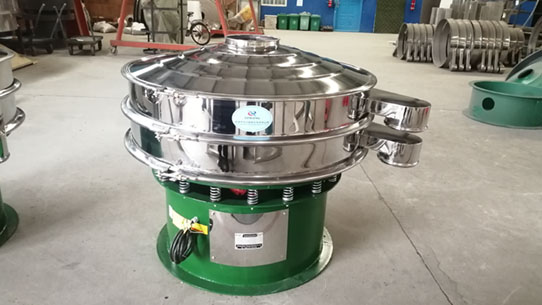
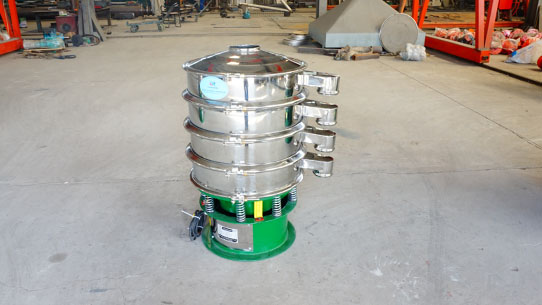
As a core piece of production equipment, the role of a continuous screening machine is not limited to material grading; it also involves achieving true, uninterrupted operation through advanced de-blinding technologies. This article explores the core challenges in industrial screening and analyzes how scientific equipment selection and de-blinding solutions can solve these clogging issues, thereby significantly increasing your production line's throughput.
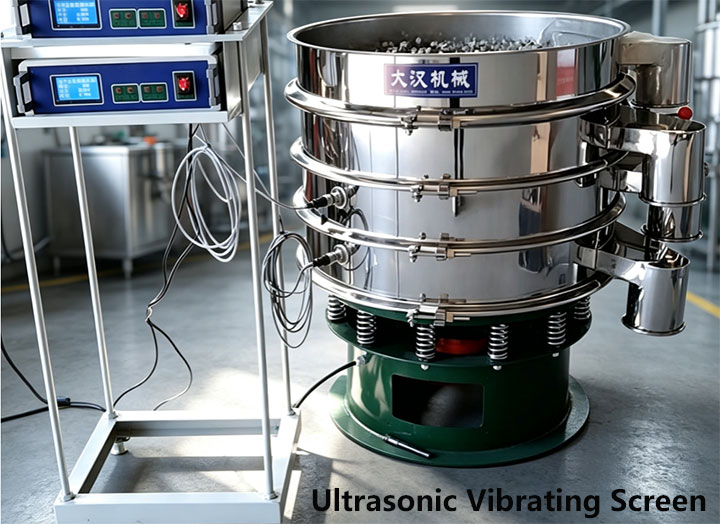
Why is Screen Blinding a Pain Point for Continuous Production Lines?
The screening machine is a critical component in continuous production processes for ensuring material grading efficiency and line stability. However, screen blinding and material pegging frequently lead to the following issues:
- Reduced Throughput: When screen apertures are obstructed by material particles, the effective open area decreases, leading to longer material retention times on the screen surface. This directly reduces the throughput per unit of time.
- Unplanned Downtime: To clear obstructed screens, production lines are often forced to halt operations. This unplanned downtime increases labor costs for cleaning and disrupts the production rhythm, affecting the coordination efficiency of the entire line.
- Compromised Product Consistency: Screen blinding impairs screening accuracy, allowing impurities or oversized particles that should have been filtered out to enter the final product, thereby affecting the stability of product quality.
- Increased Equipment Load: To address material accumulation on the screen surface, operators may sometimes increase the equipment's vibration force. Such non-standard operation increases fatigue loads on motors, springs, and frames, shortening the equipment's service life.
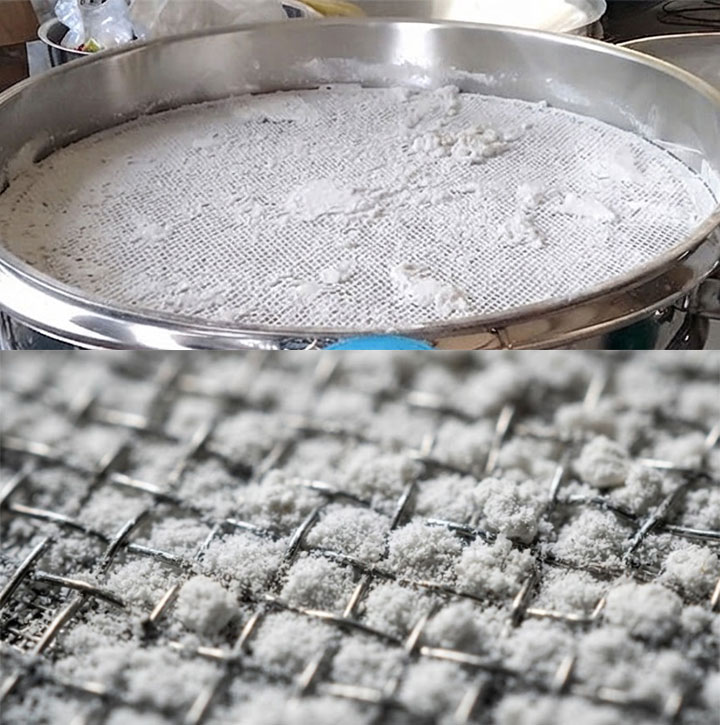
Core Principles and De-blinding Technologies of Continuous Screening Machines
Operational Principle: Achieving Fully Automated, Uninterrupted Production
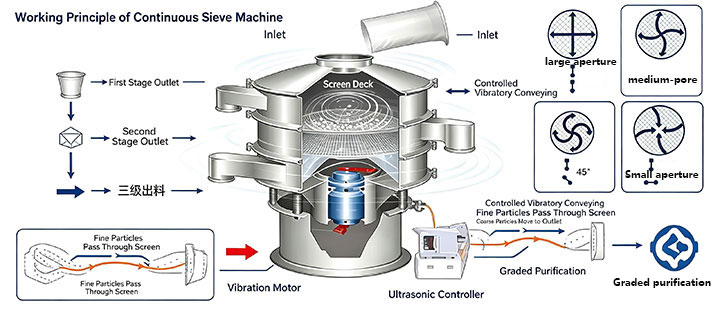
The working principle of a continuous screening machine can be understood as "controlled vibratory conveyance." Driven by the vibration force from the motor, the screen follows a specific motion trajectory, such as vertical jumping or circular motion. When material enters the screen surface, this continuous vibration acts much like manual sifting, causing the material to bounce and disperse across the mesh.
During this process, particles smaller than the screen apertures pass through by gravity, while larger particles are moved toward the discharge outlet by the vibratory force. This design ensures an automated, "assembly-line" style of material grading from infeed to outfeed, requiring minimal manual intervention and maintaining stable production line operation.
Key Technical Solutions: Solving "Blinding" and "Pegging" at the Source
To maintain production continuity, we equip the screen with specialized "cleaning assistants" tailored to different material challenges.
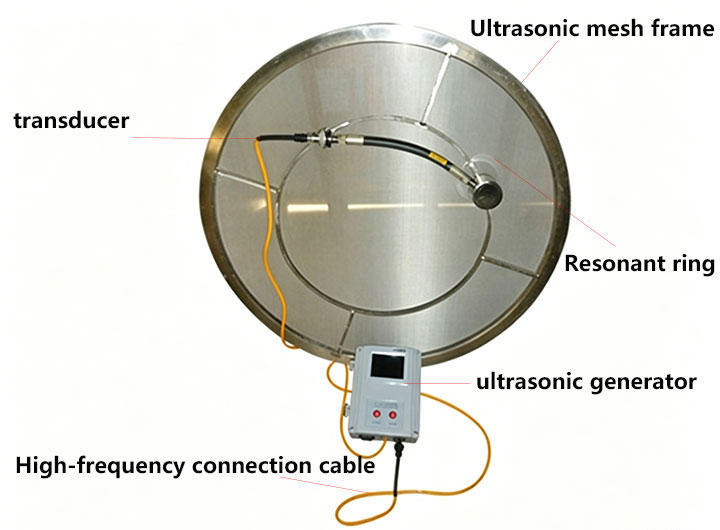
Ultrasonic De-blinding
Designed for ultra-fine or easily agglomerated powders. It applies high-frequency vibrations to the screen, allowing the mesh to automatically shake off sticking particles. This not only prevents clogging but also significantly improves screening efficiency.
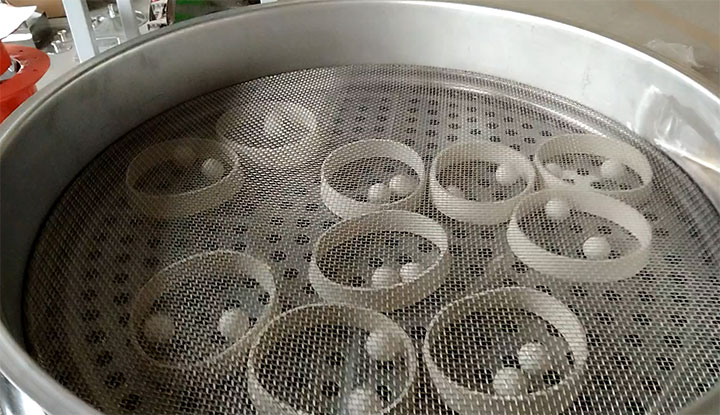
Ball Trays and Cleaning Rings
The standard solution for granular materials. As the machine vibrates, rubber balls beneath the screen bounce and strike the mesh continuously, physically "bouncing" out any particles stuck in the apertures to keep them clear.
Rotary Brush Systems
Ideal for sticky materials. A rotating brush installed beneath the screen continuously sweeps the underside of the mesh. This physical contact forces off material that would otherwise "blind" or clog the openings, making it well-suited for materials prone to moisture or clumping.
According to industrial standards, optimizing your de-blinding system can increase throughput by up to 20-30% compared to traditional manual cleaning methods.
How to Select the Matching Screening Solution Based on Material Characteristics?
In industrial screening, selecting the right solution requires precise matching based on your specific material characteristics. The following four aspects should be considered during the selection process:
- Particle Size and Mesh Count: The finer the screening target (e.g., above 200 mesh), the higher the risk of screen blinding. For ultra-fine powders, ultrasonic de-blinding technology is the preferred choice.
- Viscosity and Moisture Content: If the material is sticky or has high moisture content, it is highly prone to blinding. In such cases, vibration alone is insufficient; we recommend a rotary brush system to provide forced physical cleaning.
- Material Morphology (Granules vs. Powders): Uniform granular materials typically achieve optimal cleaning results with a ball tray system, which is cost-effective and requires minimal maintenance.
- Production Environment Standards: For food or pharmaceutical production, high standards of sealing and cleanability are essential. Beyond selecting the appropriate de-blinding solution, it should be confirmed that the equipment material meets relevant hygiene standards.
Select the Right Screening Equipment to Boost Production Capacity
A continuous screening machine is not merely a piece of mechanical equipment; it is a critical engine that balances production capacity with product quality. Precise selection and targeted de-blinding technologies—such as ultrasonic systems, ball trays, and rotary brushes—effectively resolve clogging issues, ensuring truly uninterrupted production.
If you are currently facing challenges with low screening efficiency, severe material pegging, or frequent line downtime, we are here to assist. We can provide customized screening solutions tailored to your specific material characteristics and production requirements. Please contact us to receive detailed technical specifications and professional advice for your production line optimization.