Enclosed Rotary Vibrating Screen: Working Principle, Benefits & Ultrasonic Upgrade
Wednesday July-22 2026 13:29:34
What Is an Enclosed Rotary Vibrating Screen & How It Works
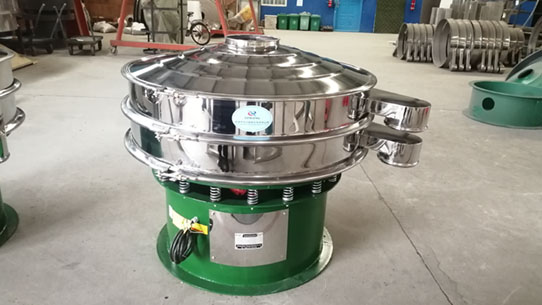
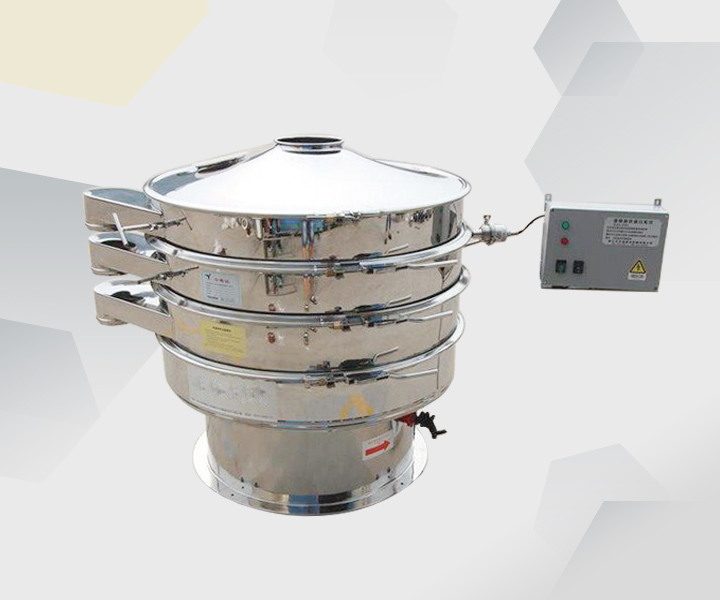
An enclosed rotary vibrating screen—often referred to in industrial processing as a dust-tight circular vibrating separator or sifters—is a high-precision screening machine designed to separate, grade, and filter powder, granules, and liquid slurries.Unlike open-frame screening equipment, this machine features a completely sealed housing structure combined with specialized food-grade or industrial sealing gaskets, preventing fine particles from escaping into the workspace and protecting the material from external contamination.
Key Structural Components
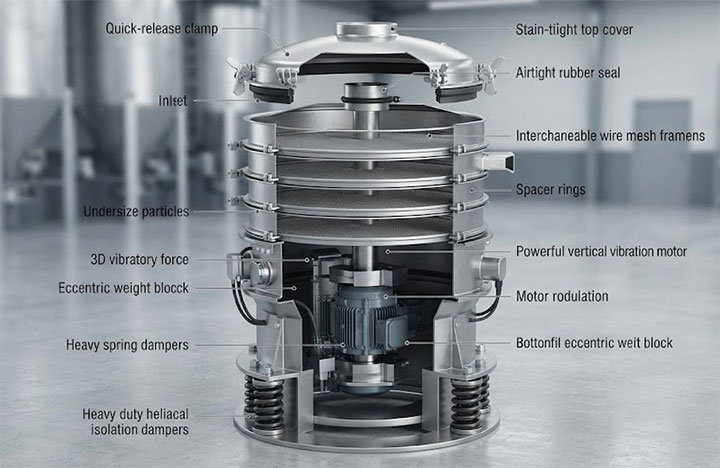
To understand how the machine functions, it is essential to look at its primary mechanical parts:
- Dust-Tight Top Cover & Sealing System: Designed with quick-release clamps and airtight rubber/silicone gaskets to ensure zero dust leakage, meeting stringent environmental and safety standards.
- Screen Frame & Mesh: Interchangeable mesh decks (single or multi-deck configurations) constructed from high-grade stainless steel (SUS304 or SUS316L) for precise particle size separation.
- Vertical Vibration Motor: Installed with eccentric weight blocks (top and bottom weights) that serve as the vibration source.
- Spring Isolation Dampers: Heavy-duty springs positioned at the base to absorb vibrational energy, protecting the floor structure and ensuring stable operation.
The Working Principle: Three-Dimensional Motion
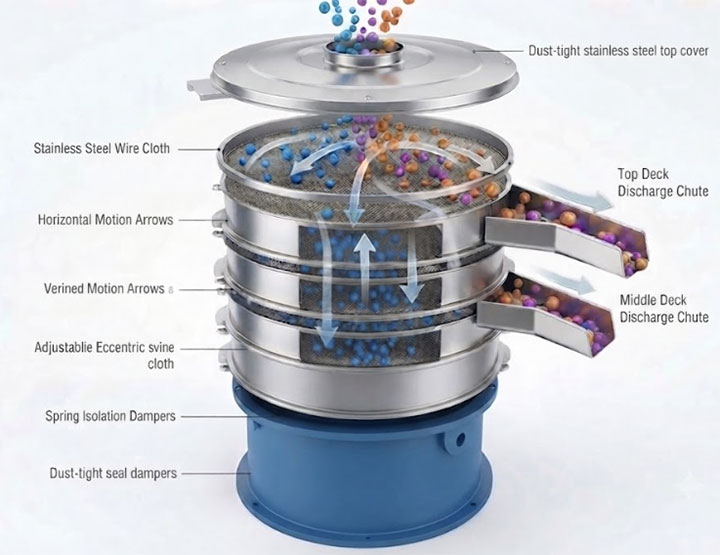
The operational mechanics of an enclosed rotary vibrating screen rely on its specialized vertical motor:
- Excitation Force Generation: When the vertical motor rotates, the adjustable eccentric weights on the upper and lower ends convert the motor's rotation into a three-dimensional (3D) movement (horizontal, vertical, and inclined motions).
- Material Trajectory: As this 3D force is transmitted to the screen deck, raw materials fed into the central inlet are instantly dispersed across the entire surface of the screen mesh.
- Stratification and Separation: Oversize particles retain enough momentum to move toward the periphery and discharge through the upper outlet chutes. Undersize particles (fines) pass cleanly through the mesh apertures, dropping to the lower deck to be discharged via the bottom outlet.
By combining an airtight enclosure with precise multi-axis kinetic energy, the machine achieves high screening efficiency while maintaining a clean, dust-free manufacturing environment.
Why Upgrade to an Ultrasonic Vibrating Screen? Solving Mesh Blinding
For plant engineers and production managers handling ultra-fine, high-viscosity, or high-adhesion powders (such as battery materials, metal powders, and fine chemical additives), standard mechanical screening often encounters a major challenge: mesh blinding.When screening powders finer than 300 to 500 mesh, particles tend to get stuck in the mesh apertures due to static electricity, moisture absorption, or strong surface tension. This reduces screening efficiency and requires frequent shutdowns for manual cleaning.Integrating an ultrasonic screening system into an enclosed rotary vibrating screen offers a definitive solution to this industrial challenge.
How the Ultrasonic Conversion Works
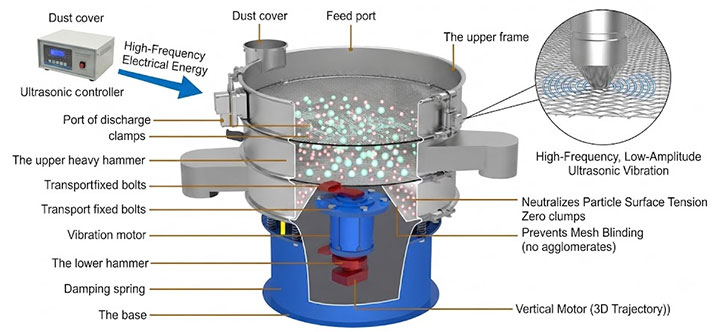
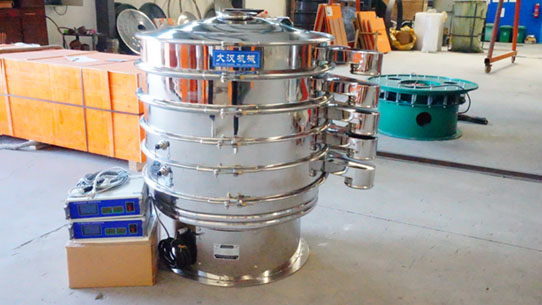
- High-Frequency, Low-Amplitude Wave: A dedicated ultrasonic generator converts standard electrical power into high-frequency electrical energy. This energy is transmitted through a transducer to the screen mesh, introducing high-frequency, low-amplitude ultrasonic vibration directly onto the wire cloth.
- Breaking Surface Forces: While the vertical motor drives the overall 3D trajectory of the material, the micro-vibrations of the ultrasonic wave continuously agitate the mesh wires. This instantly neutralizes particle surface tension, eliminates static electricity, and prevents agglomerates from sticking to or blocking the apertures.
Core Advantages of Upgrading to Ultrasonic Sifting
- Massive Boost in Capacity and Efficiency: By keeping the mesh permanently clean and unblocked, the effective screening area remains active. For difficult-to-handle fine powders, overall throughput can increase by 2 to 10 times compared to conventional systems.
- Extended Screen Mesh Lifespan: Because operators no longer need to use brushes, bouncing balls, or manual scraping to clear clogged meshes, the wear and tear on the stainless steel wire cloth is reduced, lowering long-term maintenance costs.
- Purity Protection for High-End Materials: Traditional mechanical de-blinding accessories (like rubber bouncing balls) can cause friction or contamination in sensitive sectors like pharmaceuticals and food processing. Ultrasonic screening operates cleanly without physical impact on the powder.
- Retrofit Flexibility: Plants do not need to buy a brand-new machine to gain these benefits. Existing enclosed rotary vibrating screens can often be easily retrofitted with an ultrasonic conversion kit, making it a cost-effective upgrade for active production lines.
Types of Rotary Vibrating Screens: Standard vs. Ultrasonic vs. Multideck
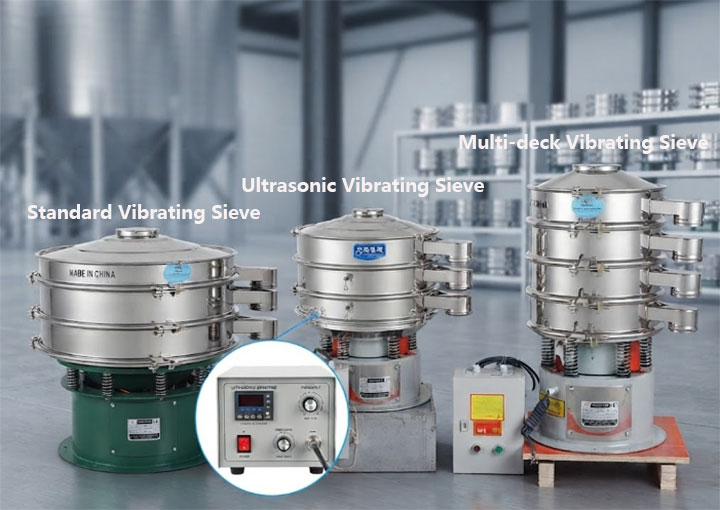
When selecting an enclosed rotary vibrating screen for your plant, choosing the right configuration is critical to matching your specific material characteristics, purity requirements, and production capacity. Rotary vibrating separators can be categorized into three primary types based on their functional design and performance capabilities:
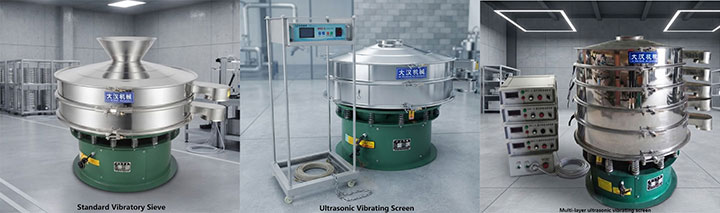
- Standard Enclosed Rotary Vibrating Screen: The reliable baseline model featuring a dust-tight frame and 3D mechanical motion for general grading and impurity removal.
- Ultrasonic Rotary Vibrating Screen: An advanced anti-blinding system integrated with an ultrasonic generator to effortlessly handle ultra-fine, sticky powders.
- Multi-Deck Enclosed Sifter: A multi-layered configuration designed to separate raw materials into multiple precise particle size fractions in a single pass.
Comparison of Rotary Vibrating Screen Types
| Model Type | Key Design Features | Mesh Size / Particle Range | Primary Applications | Best Suited For |
|---|---|---|---|---|
| Standard Rotary Vibrating Screen | Fully enclosed frame, vertical motor with eccentric weights, standard mesh decks. | Coarse to medium (2 mesh to 200 mesh) | General grading, safety screening, and liquid filtering. | Free-flowing powders, standard granules, and liquid slurries without extreme static or moisture. |
| Ultrasonic Rotary Vibrating Screen | Standard enclosed structure + integrated ultrasonic generator, transducer, and resonance ring. | Ultra-fine (300 mesh to 635+ mesh) | High-precision screening of cohesive, lightweight, or high-adhesion powders. | Lithium battery materials, fine metal powders, pharmaceutical ingredients, and sticky chemical pigments. |
| Multi-Deck Enclosed Sifter | Stacked frame shells (2 to 5 decks), multiple discharge spouts within one sealed unit. | Varies by deck configuration (Multi-grade sorting) | Simultaneous multi-stage particle size classification. | Processes requiring materials to be sorted into 3 to 5 distinct size fractions in a single pass. |
Key Benefits of Fully Enclosed Rotary Sifters
For industrial processing facilities, moving from open-style screening equipment to a fully enclosed rotary vibrating system delivers immediate improvements in operational safety, product quality, and environmental compliance. The primary advantages of utilizing dust-tight enclosed screens include:
- Airtight Sealing: Equipped with precision-molded silicone or rubber sealing gaskets, heavy-duty clamp rings, and dust-tight solid covers.
- Clean Working Environment: Prevents fine particulate matter from escaping into the workshop air, ensuring a safe, breathable workspace for operators and reducing explosion risks associated with combustible dusts.
- Isolated Processing Chamber: The sealed housing acts as an impenetrable barrier against ambient moisture, airborne bacteria, dust, and foreign debris.
- Controlled Material Flow: Enclosed collection spouts and sealed discharge outlets ensure that 100% of the processed material is captured and directed into its designated container without spilling onto the factory floor.
- Balanced Energy Transfer: The combination of precision-engineered eccentric weights on the vertical motor and heavy-duty spring isolation dampers at the base ensures that vibrational energy is focused on the screening deck rather than transmitted into the factory floor.
- Quiet Operation: Enclosed housings naturally muffle mechanical operational noise, contributing to a more comfortable factory floor.
Industrial Applications: Where Enclosed Rotary Vibrating Screens Are Used
Because of their high screening precision, versatile multi-deck configurations, and dust-tight structural integrity, enclosed rotary vibrating screens are widely utilized across a diverse range of demanding industries. The primary sectors and applications include:
- Chemical & Powder Processing: Screening and grading of resin powders, plastic masterbatches, pigments, coatings, PVC powder, detergent powder, and fertilizer granules.
- Food & Beverage Industry: De-dusting and grading of wheat flour, starch, milk powder, sugar granules, spices, cocoa powder, and food additives.
- Pharmaceuticals & Fine Ingredients: Sifting Active Pharmaceutical Ingredients (APIs), excipients, herbal medicine powders, and vitamin granules.
- Lithium Battery & New Energy Materials: Screening cathode and anode materials (such as lithium iron phosphate, graphite powder, and cobaltate), as well as battery binders and conductive additives.
- Metallurgy & Abrasive Powders: Grading metal powders (iron, copper, aluminum, and alloy powders), tungsten carbide, and glass beads.
Technical Specifications & Model Selection Table
To help plant engineers and procurement teams determine the right machine size and configuration for their production line, the following technical specifications outline our standard enclosed rotary vibrating screens.
Standard Model Specifications (Single / Multi-Deck)
| Model Code | Diameter (mm) | Screen Area (m²) | Mesh Size (Mesh) | Feeding Size (mm) | Vibrations (rpm) | Effective Diameter (mm) | Decks | Power (kW) |
|---|---|---|---|---|---|---|---|---|
| DH-600 | Φ600 | 0.24 | 2 - 500 | <Φ10 | 1500 | Φ560 | 1 - 5 | 0.25 |
| DH-800 | Φ800 | 0.45 | 2 - 500 | <Φ15 | 1500 | Φ760 | 1 - 5 | 0.55 |
| DH-1000 | Φ1000 | 0.67 | 2 - 500 | <Φ20 | 1500 | Φ930 | 1 - 5 | 0.75 |
| DH-1200 | Φ1200 | 1.0 | 2 - 500 | <Φ30 | 1500 | Φ1130 | 1 - 5 | 1.1 |
| DH-1500 | Φ1500 | 1.6 | 2 - 500 | <Φ10 | 1500 | Φ1430 | 1 - 5 | 1.5 |
| DH-1800 | Φ1800 | 2.43 | 2 - 500 | <Φ15 | 1500 | Φ1760 | 1 - 5 | 2.2 |
| DH-2000 | Φ2000 | 3.01 | 2 - 500 | <Φ20 | 1500 | Φ1960 | 1 - 5 | 3 |
Frequently Asked Questions (FAQs)
How do enclosed rotary vibrating screens prevent fine powder from escaping at the discharge points?
Enclosed rotary vibrating screens utilize dust-tight solid covers, precision-molded silicone or rubber sealing gaskets, and heavy-duty quick-release clamp rings to create a completely airtight housing. Additionally, the discharge spouts and outlets are tightly sealed with flexible connectors or sleeves, ensuring that fine powders and particulate matter are fully contained within the system and cannot escape into the workshop air during operation.
Can an existing standard rotary vibrating screen be retrofitted with an ultrasonic system?
Yes. Plants do not necessarily need to purchase a brand-new machine to eliminate mesh blinding. Standard enclosed rotary vibrating screens can be easily retrofitted with an ultrasonic conversion kit—including the generator, transducer, and resonance ring—making it a cost-effective upgrade to boost throughput for ultra-fine powders.
Do you offer material testing services by mail to help determine the correct screening equipment?
Yes. We provide professional material testing services where clients can mail in physical product samples of their powders, granules, or slurries. Our engineering team conducts laboratory tests to analyze particle size distribution, flowability, and moisture content, allowing us to accurately select and recommend the most suitable rotary vibrating screen or ultrasonic configuration for your specific production requirements.