Food Grade Screening Machine: Choosing Circular, Linear, or Ultrasonic?
Friday July-17 2026 14:29:15
What Makes a Screener "Food Grade"?
A Food Grade Screening Machine is equipment that meets FDA-compliant material standards, hygienic design requirements, and dust-tight construction for safe direct contact with edible products. Here are the four core requirements:
Food-Grade Stainless Steel Construction
A food grade screener should use SUS304 stainless steel (or SUS316 for acidic or salty applications) for all product-contact parts. These grades resist corrosion, will not leach harmful substances into food, and withstand repeated washdowns. Lower-grade steels can rust or contaminate products — an unacceptable risk in food processing.
Hygienic, Dead-End-Free Design
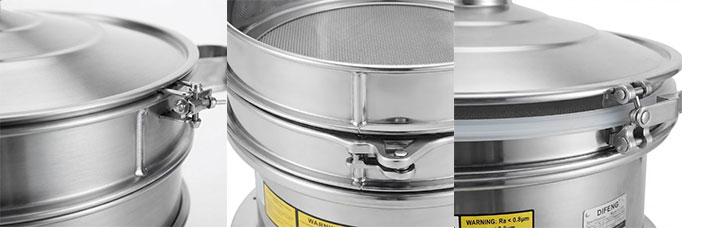
A food grade screener should be designed to avoid crevices, sharp corners, or dead zones where material can accumulate and promote bacterial growth. Surfaces should be smoothly polished (Ra ≤ 0.8μm recommended) to allow thorough cleaning. Components should be easy to disassemble for sanitation — often a key requirement for meeting HACCP and GMP standards.
Fully Enclosed, Dust-Tight Construction
A food grade screener is typically fully enclosed to prevent powder dust from escaping and external contaminants from entering. Gaskets and seals — made of FDA-approved silicone or rubber — ensure the system remains airtight during operation, protecting both product integrity and operator safety.
Compliance with International Food Safety Standards
Reputable food grade screening machines comply with FDA regulations for food contact materials, and typically meet GMP and HACCP requirements. For dairy and liquid applications, some manufacturers also offer 3A Sanitary Standards certification.
The 'food grade' label is not a marketing claim — it's a specification that the equipment is built from safe materials, designed for hygiene, sealed against contamination, and backed by regulatory compliance. When evaluating screeners for your production line, always verify these four pillars — they determine whether your equipment protects your brand or puts it at risk.
Understanding Your Three Core Options
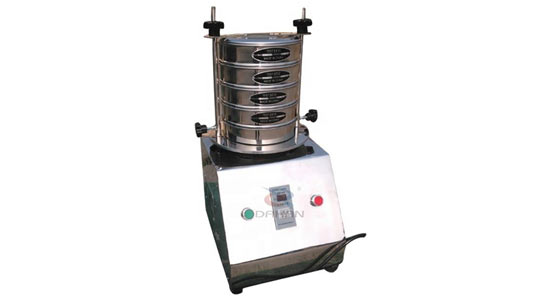
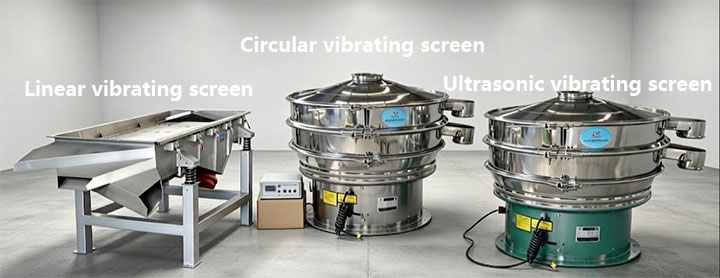
Food grade screening machines come in several configurations, but three types dominate the food processing industry: Circular Vibrating Screens, Linear Vibrating Screens, and Ultrasonic Vibrating Screens. Each operates on a different principle and serves distinct applications.
| Comparison Item | Circular Vibrating Screen | Linear Vibrating Screen | Ultrasonic Vibrating Screen |
|---|---|---|---|
| Motion Pattern | 3D circular motion | Linear reciprocating motion | 3D circular + high-frequency ultrasonic vibration |
| Typical Mesh Range | Up to 500 mesh | 10mm to 200 mesh | Up to 635 mesh |
| Strengths | High precision, dry/wet materials, multi-deck grading | High capacity, continuous production lines | Anti-blinding, ultra-fine powders, handles electrostatic/adhesive materials |
| Ideal For | Flour, starch, milk powder, sugar, syrups | Grains, nuts, beans, crystalline sugar, dehydrated vegetables | Ultra-fine additives, plant-based powders, specialized ingredients |
Now let's examine each of the three main types in detail — how they work, where they excel, and what limitations to consider when making your choice.
Circular Vibrating Screen — The Versatile All-Rounder for Dry & Wet Materials
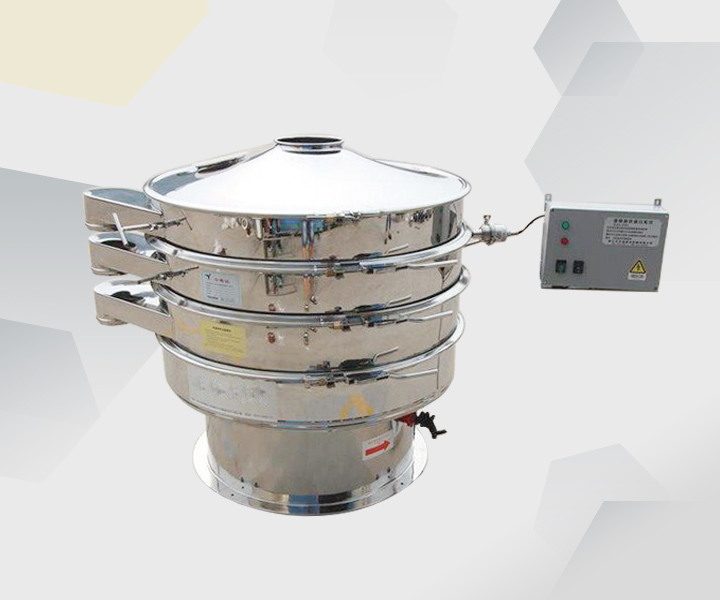
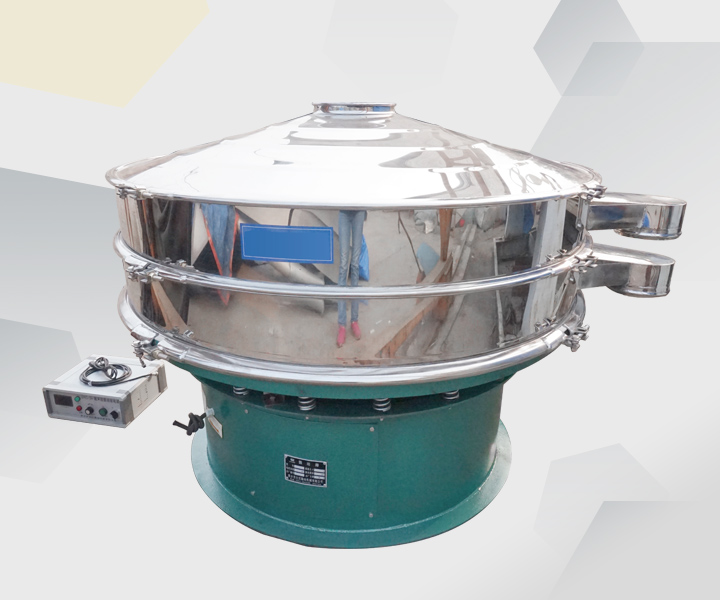
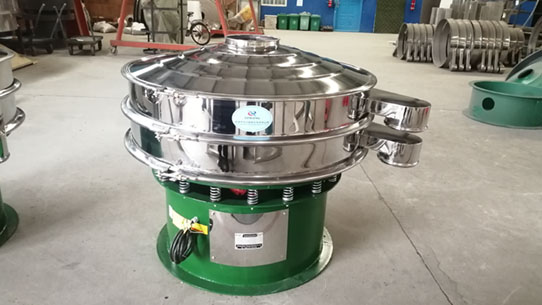
The Circular Vibrating Screen — also known as a rotary vibrating screen — uses a vertical vibration motor with eccentric weights at both the top and bottom ends. This setup generates a three-dimensional motion pattern (horizontal, vertical, and inclined), creating a circular trajectory on the screen surface. Material moves in a spiral path from the center outward, giving particles multiple opportunities to pass through the mesh.
Key Strengths:
- High precision: Achieves screening accuracy of approximately 95%, handling materials from 5mm down to 500 mesh
- Dry & wet capability: Works equally well with dry powders, granules, and liquid slurries
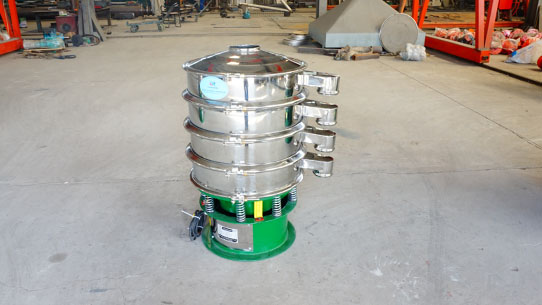
- Multi-deck grading: Supports 1 to 5 screen layers for simultaneous classification into multiple fractions
- Compact footprint: Takes up minimal floor space
- Quick mesh change: Screen replacement takes just 3–5 minutes
- Common Food Applications: Flour, starch, milk powder, protein powder, sugar, cocoa powder, seasonings, food additives, fruit juices, and syrups.
Limitations: Throughput on circular screens is moderate compared to linear models, and efficiency declines for ultra-fine powders above 500 mesh or highly adhesive materials.
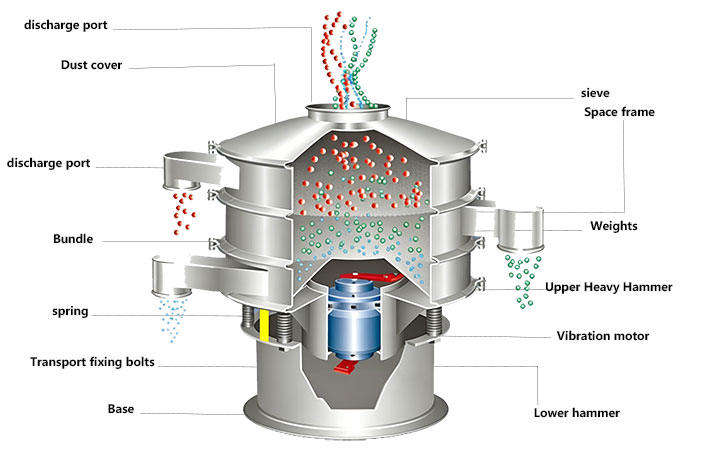
Linear Vibrating Screen — High-Capacity Screening for Dry Bulk Materials
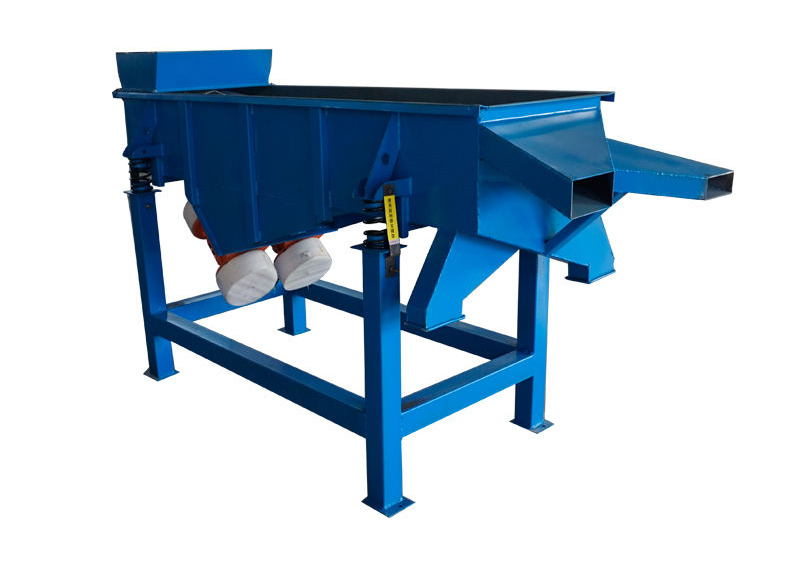
The Linear Vibrating Screen uses two horizontally mounted vibrating motors that rotate in opposite directions. The resultant force drives material in a straight-line trajectory — particles are thrown forward in a series of small jumps, moving from feed end to discharge end in a thin, even layer.
Key Strengths:
- High capacity: Large screening area and thin-layer material movement enable exceptionally high throughput
- Continuous production: Linear motion integrates seamlessly with upstream and downstream equipment on automated lines
- Simple design: Low energy consumption, easy maintenance, and reliable operation
- Multi-deck available: Supports up to 5 screen layers
- Common Food Applications: Grains (wheat, corn, rice), nuts, beans, crystalline sugar, dehydrated vegetables, and other dry bulk solids.
Limitations: Screening precision is lower than circular screens. The linear motion is less effective at preventing mesh blinding, especially with fine or sticky materials. Linear screens are best suited for materials above 200 mesh; efficiency drops significantly for finer powders.
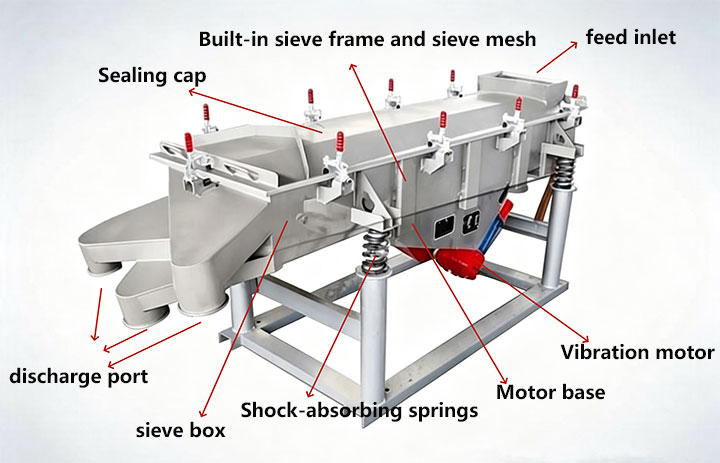
Ultrasonic Vibrating Screen — The Solution for Fine Powders and Blinding Issues
The Ultrasonic Vibrating Screen builds on the circular vibrating screen design, adding an ultrasonic generator and transducer mounted directly on the screen mesh. This system converts 60Hz electrical power into high-frequency electrical energy (typically 18–40kHz). That energy is then converted into mechanical vibration on the mesh surface. The result: low-frequency circular motion combined with high-frequency ultrasonic vibration that actively keeps the mesh clear.
Key Strengths:
- Eliminates blinding: High-frequency vibration breaks down electrostatic charges, surface tension, and particle agglomeration — the three main causes of mesh blockage
- Ultra-fine capability: Handles materials from 100 mesh up to 635 mesh and beyond
- Higher throughput than standard circular screens for fine powders, thanks to reduced blinding
- Extended screen life: Less manual cleaning and fewer mechanical stress cycles on the mesh
- Common Food Applications: Ultra-fine starches, plant-based protein powders, milk powder (ultra-fine grades), food additives, and any fine powder with high electrostatic or adhesive properties.
Limitations: Higher initial cost compared to conventional circular screens. Sensitive to moisture — high humidity materials may require preconditioning.
We recently helped a starch manufacturer virtually eliminate mesh blinding issues by switching to our ultrasonic system, increasing their hourly yield by 20%.
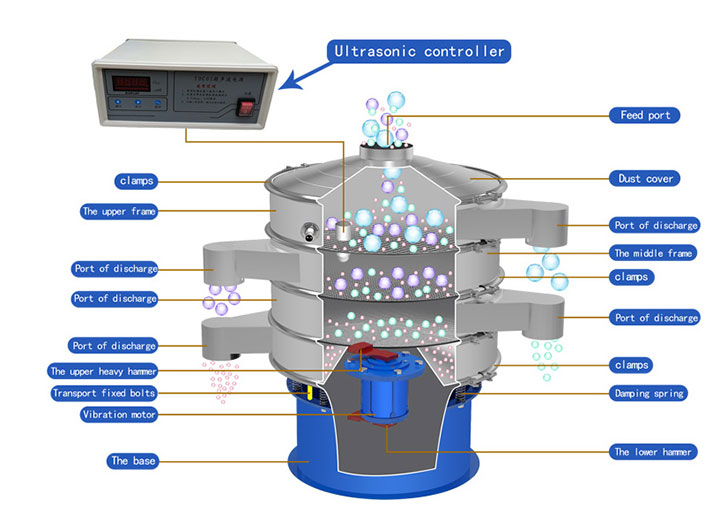
How to Choose the Right Food Grade Screening Machine
Choosing the right screener mainly comes down to four key factors. Run your application through this decision framework, and you'll have a solid basis for making the right call.
Define Your Material Characteristics
Start with your material. Different screeners handle different types of products:
| Material Characteristic | Recommended Screener Type |
|---|---|
| Dry, free-flowing powders (flour, starch, sugar) | Circular Vibrating Screen — excellent all-round performance |
| Coarse particles, granules, or bulk solids (grains, nuts, crystalline sugar) | Linear Vibrating Screen — maximum throughput |
| Ultra-fine powders (below 325 mesh), electrostatic, or easily agglomerated materials | Ultrasonic Vibrating Screen — prevents blinding and handles the finest particles |
| Wet materials, slurries, or liquid suspensions | Circular Vibrating Screen — handles both dry and wet applications |
Define Your Screening Objective
What are you trying to achieve?
- Oversize removal (check screening): All three types can do this — choose based on material and capacity needs.
- Multi-grade classification (2-5 fractions): Circular Vibrating Screen or Linear Vibrating Screen with multiple decks.
- High-precision fine screening (200 mesh and above): Circular Vibrating Screen is the standard choice; for 325+ mesh, Ultrasonic Vibrating Screen delivers the best results.
Define Your Production Capacity
Throughput requirements often dictate the equipment type:
- High-volume production (5+ tons/hour): Linear Vibrating Screen offers the highest capacity at the lowest cost per ton.
- Small to medium volumes with precision requirements: Circular Vibrating Screen balances accuracy and capacity.
- Ultra-fine powders with moderate volumes: Ultrasonic Vibrating Screen maximizes yield from premium materials.
Consider Your Operating Environment
- Limited floor space: Circular Vibrating Screen or Ultrasonic Vibrating Screen have smaller footprints.
- Integration with automated production lines: Linear Vibrating Screen feeds materials in a straight line, making it easiest to connect with upstream/downstream equipment.
- Sanitation requirements: All three can be built to food grade standards with SUS304/316 construction and hygienic design.
- Budget: Linear Vibrating Screen has the lowest upfront cost; Ultrasonic Vibrating Screen has the highest but delivers the best ROI for challenging ultra-fine applications.
Common Misconception: Ultrasonic is always the best choice for fine powders.
Not necessarily. Ultrasonic screens excel with materials below 325 mesh that are electrostatic or prone to agglomeration. But for free-flowing powders above 200 mesh, a standard circular screen often delivers comparable results at a significantly lower cost. The key is matching the technology to your specific material — not assuming that "more advanced" always means "better."
Quick Summary: When to Choose What
| If your priority is... | Choose... |
|---|---|
| Maximum precision (500+ mesh) | Ultrasonic Vibrating Screen |
| High precision (up to 500 mesh) with balanced capacity | Circular Vibrating Screen |
| Maximum throughput with coarser materials (≤200 mesh) | Linear Vibrating Screen |
| Handling wet materials or slurries | Circular Vibrating Screen |
| Avoiding mesh blinding with sticky/fine powders | Ultrasonic Vibrating Screen |
| Best value for general-purpose food powder screening | Circular Vibrating Screen |
Still unsure? Most reputable manufacturers offer sample testing services — send them a sample of your material and let the test results guide your decision.
Frequently Asked Questions
Q1: How long does the material testing process take?
Typically, we complete the material testing and provide a comprehensive performance report within 3–5 business days after receiving your sample at our facility.
Q2: Do you offer custom modifications for specific food-grade production lines?
Yes, we provide professional customized design services to ensure our equipment meets your specific GMP, HACCP, or other international hygiene requirements.
Q3: Is the equipment compliant with international food safety standards?
Yes. All our food-grade screening machines are constructed with food-contact-approved materials and are designed to meet rigorous international food safety and hygiene standards.
Ready to Find the Right Food Grade Screening Machine for Your Production Line?
By now, you should have a clear picture of the differences between circular, linear, and ultrasonic screening machines — and which type best fits your material, capacity, and production goals. But every application is unique. The most reliable way to make the right choice is to test your actual material on the equipment.
Here's how we can help:
- Free material testing: Send us your sample. We'll run it through the appropriate screener and provide you with sieve analysis results and performance data.
- Custom recommendations: Based on your product characteristics, capacity requirements, and facility constraints, we'll recommend the optimal model and configuration.
- Fast turnaround: Get your test results and equipment proposal within days, not weeks.
Our team is available to discuss your application or arrange a free material test — just let us know when works for you.