High Precision Screening Machine: How Ultrasonic Sifter Solves Mesh Blinding in Pharma Powder
Monday July-13 2026 15:48:35
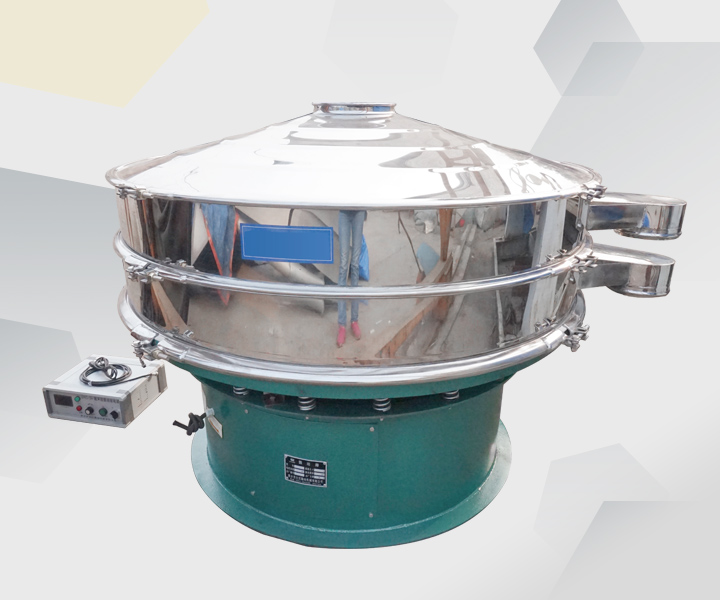
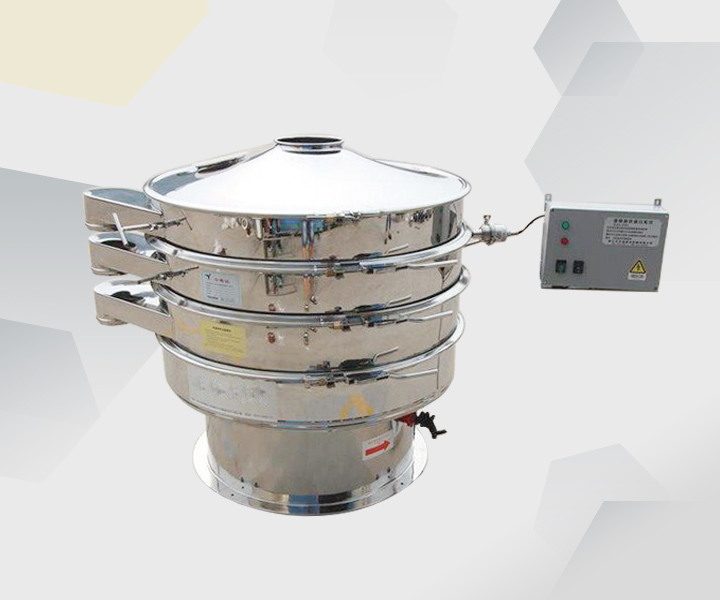
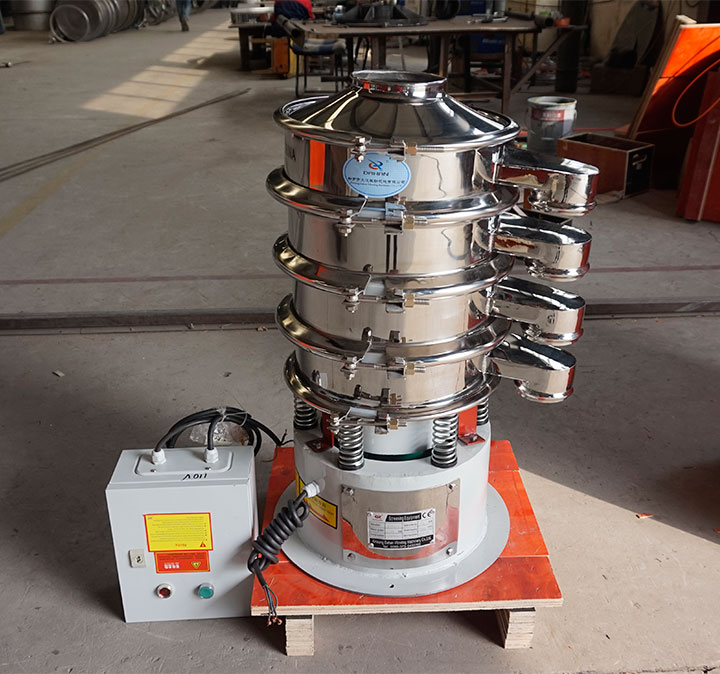
Handling sticky or electrostatic particles—like active pharmaceutical ingredients (APIs) and fine chemical powders—tends to expose the limits of traditional sifters. While achieving a strict particle size distribution demands a reliable high precision screening machine, actual production often tells a different story. For many production managers, the daily reality is a frustrating bottleneck: constant downtime caused by severe mesh blinding.
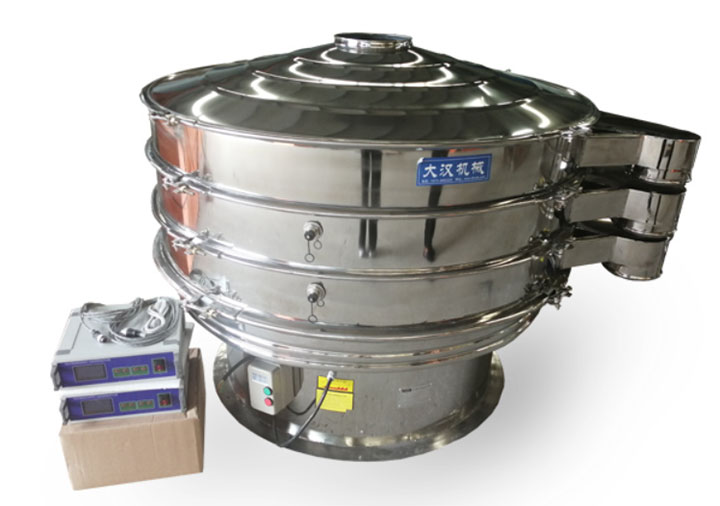
The Cost of Mesh Blinding in Pharmaceutical and Fine Chemical Screening
When dealing with micron-level APIs or raw chemical formulations, particle agglomeration is a constant headache. Static charges and moisture absorption cause fine particles to cluster, quickly choking the micro-openings of your high precision screening machine.
When this happens, the hidden costs start piling up across your production floor:
Manual cleaning forces operators to halt the line completely, turning a continuous process into a frustrating stop-and-go operation.
Frequent teardowns put the delicate wire cloth at risk, as heavy-handed handling easily stretches or tears high-mesh screens.
Opening the sealed sifter multiple times a day exposes high-value powders to cleanroom air, increasing the hazard of cross-contamination.
Constant batch interruptions force you to run extra safety checks, risking the rejection of the entire product batch if contamination occurs.
The Science Behind Ultrasonic Vibration in High Precision Screening Machines
Standard mesh separators rely purely on eccentric motors to shake the material. While this mechanical bounce moves larger granules, it does little to untangle micro-powders that have bonded due to static or moisture.
To solve this, an ultrasonic high precision screening machine introduces a secondary, high-frequency kinetic energy directly to the screen wire:
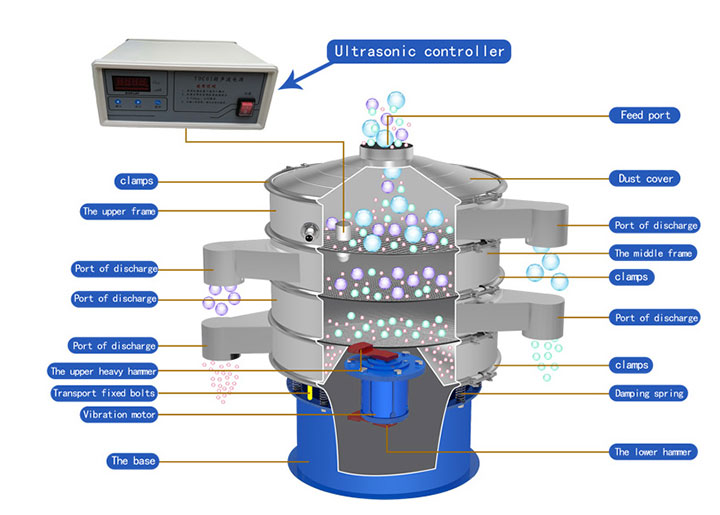
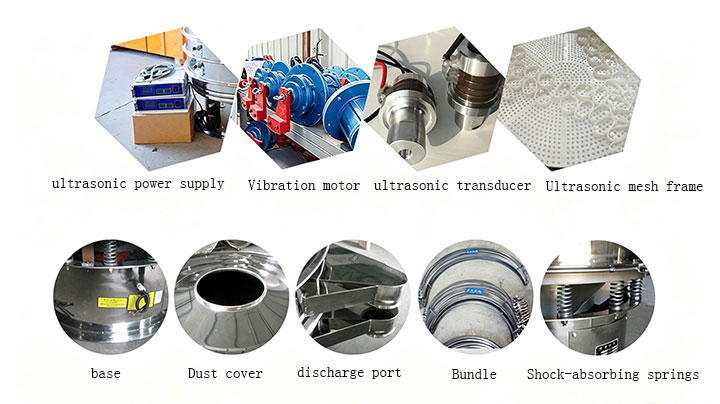
A specialized generator converts standard electrical power into high-frequency electricity, routing it straight to an ultrasonic transducer attached to the screen frame.
This transducer transforms the electrical signal into a continuous, microscopic acoustic wave that pulses at tens of thousands of times per second.
Rather than shaking the entire heavy machine frame, this micro-vibration travels exclusively across the thin stainless steel mesh cloth.
The rapid pulse breaks the electrostatic bonds holding the sticky powder together, turning clumpy material back into free-flowing individual particles.
As a result, the particles glide effortlessly through the openings instead of hovering or lodging inside the wire mesh.
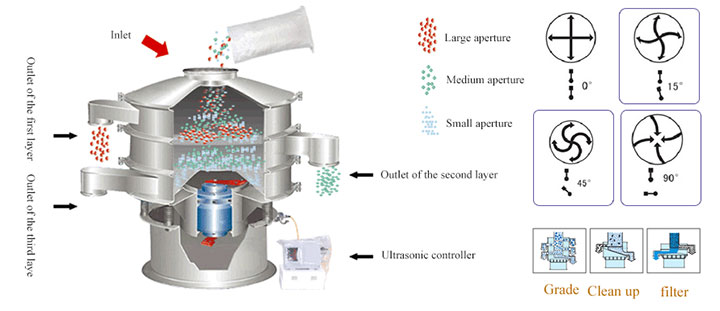
Performance Breakdown: Ultrasonic vs. Conventional Mechanical Sifting
Evaluating how material behaves under different frequencies clarifies why acoustic waves prevent clogging where mechanical force fails. The physical distinction between the two methods comes down to operational scale:
| Operational Metric | Standard Rotary Vibrating Screen | Ultrasonic High Precision Machine |
|---|---|---|
| Primary Frequency | 1,440 – 2,800 RPM (Low Frequency) | 33,000 – 38,000 Hz (High Frequency) |
| Vibration Amplitude | 1 – 5 mm (Macroscopic displacement) | 1 – 10 μm (Microscopic pulse) |
| Mesh Separation Limit | Struggles below 150 microns (100 mesh) | Efficient down to 25 microns (635 mesh) |
| Material Temperature | Friction build-up from continuous rubbing | Cool operation; acoustic waves prevent friction |
Critical Benefits of Ultrasonic Sifters for GMP-Compliant Processing
For pharmaceutical and fine chemical plants, integrating an ultrasonic sifter is less about speed and more about strict contamination control. Upgrading to an ultrasonic high precision screening machine allows your production floor to meet strict safety mandates while maintaining high throughput.
The core advantages of this setup include:
Zero Mesh Disintegration: Traditional separators rely on bouncing rubber balls to clear blockages, which risk degrading and shedding particles into the pharmaceutical batch. Acoustic wave technology removes the need for these wear parts completely.
Dust-Tight Containment: Fully sealed, mirror-polished SS316L stainless steel enclosures prevent ultra-fine materials from escaping into the workspace, protecting your operators and keeping cleanroom air pristine.
Thorough Cleanability: The seamless interior minimizes material residual build-up, allowing your team to perform thorough washdowns and product changeovers in significantly less time.
Reduced Mesh Fatigue: Operating with precise acoustic pulses rather than aggressive mechanical shaking extends the service life of delicate wire cloths, cutting down on yearly replacement costs.
Frequently Asked Questions About High Precision Pharmaceutical Screening
Can ultrasonic sifters handle hazardous or explosive dust environments?
Yes, but only if the entire system is properly certified. For pharmaceutical environments handling volatile chemical compounds or flammable organic powders, the ultrasonic generator and transducer require an ATEX or Ex-proof classification. Standard industrial units pose an electrical arcing hazard if dust penetrates the enclosure.
What type of seal design is best for aggressive fine chemicals and solvents?
Standard general-purpose separators frequently rely on basic rubber or silicone seals that degrade rapidly when exposed to harsh chemical formulations or organic solvents. For GMP-compliant or corrosive chemical processing, the machine should be configured with custom-molded, FDA-approved PTFE (Teflon) or high-grade Viton gaskets to prevent degradation and guarantee a dust-tight seal
Why does mesh tensioning matter, and should screens be hand-tensioned?
Hand-tensioned screens are a common point of failure because the wire cloth inevitably sags within weeks of continuous operation. This sagging destroys particle size accuracy and accelerates mesh wear. High-precision pharmaceutical applications require screens bonded via advanced pneumatic tensioning systems and specialized, FDA-approved bonding agents to ensure uniform vibration across the entire surface.
What is the practical screening limit for an ultrasonic machine?
While standard vibrating screens begin losing efficiency at around 150 microns, ultrasonic high precision machines excel at handling ultra-fine materials down to 25 microns (approx. 635 mesh). Beyond 25 microns, the physical attraction forces of the powder often require a vacuum-assisted or airflow sifting system rather than gravity separation.
Let’s Discuss Your Powder Properties: Book a Free Material Screening Test
Every powder reacts differently. Factors like electrostatic attraction, moisture levels, and particle shape mean that what works for one formulation might blind the mesh on another. Instead of guessing which configuration fits your production line, you can verify the performance before making any commitment.
Our laboratory is equipped to run trial separations on your specific material. By sending a small sample of your API or fine chemical powder to our engineers, we will help you determine the optimal machine configuration for your line:
- We run a live test using our ultrasonic high precision screening machine to measure your exact throughput per hour.
- Our team monitors the mesh under load to ensure zero blinding and records the exact frequency required for your material.
- You receive a detailed trial report complete with particle distribution data and recommended machine specifications.
Ready to eliminate the guesswork from your process? Reach out to our technical team today to arrange your free material screening test.