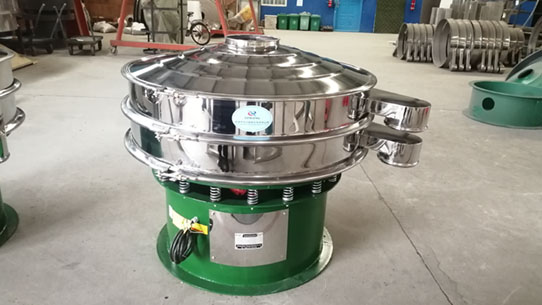
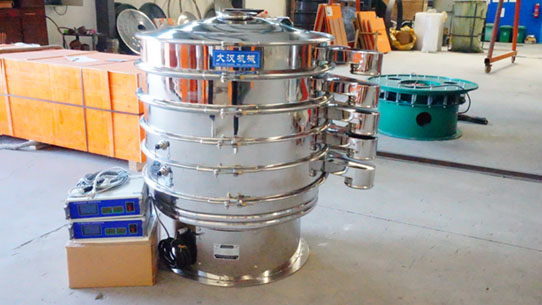
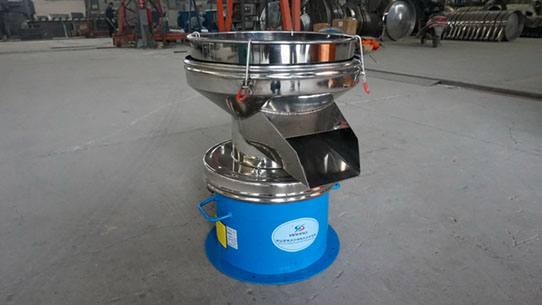
Whether processing chemicals, minerals, pharmaceuticals, or food ingredients, manufacturers frequently rely on advanced separation technologies to meet strict specifications. Among these, fine powder separators—often referred to as air classifiers—and mechanical screening devices play vital roles. While each operates on distinct physical principles, combining a fine powder separator with a rotary vibrating screen creates a synergistic workflow that enhances production yield and material purity.
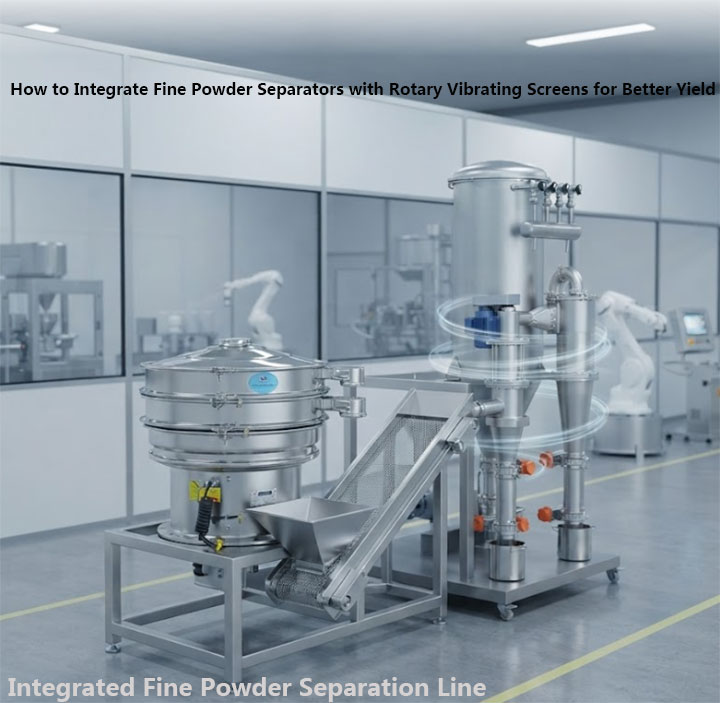
Air Classifiers and Rotary Vibrating Screens Overview
To build an efficient multi-stage processing line, it is essential to understand how each piece of equipment functions and where its operational strengths lie.
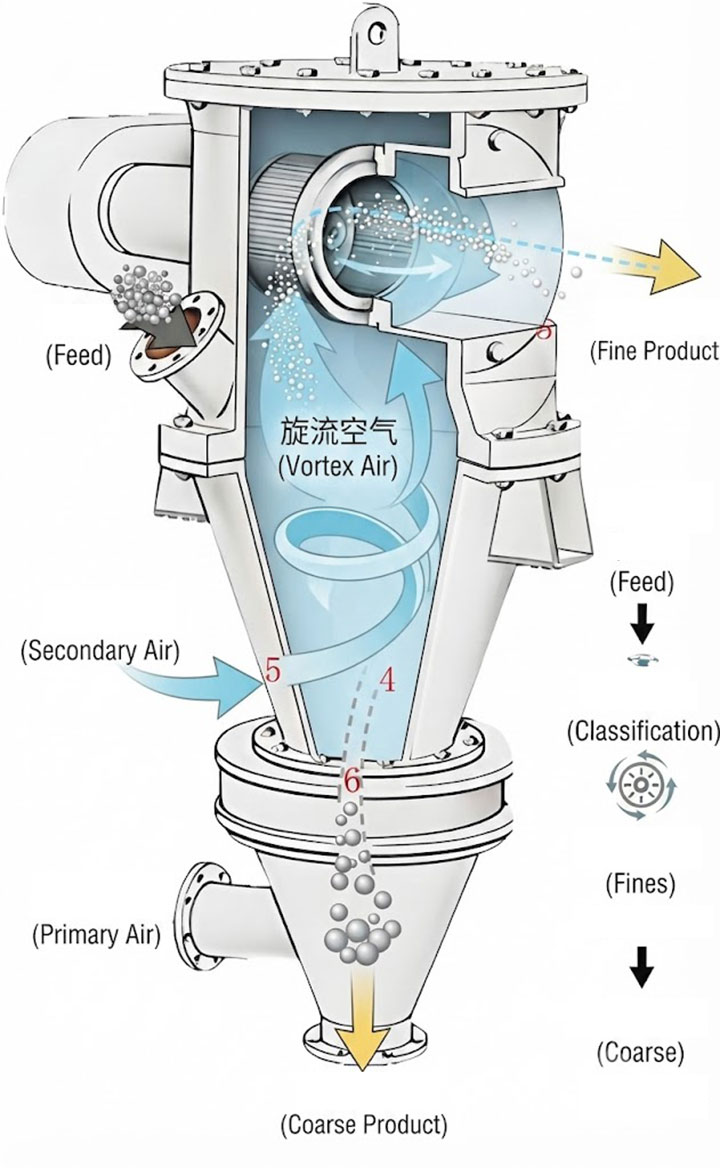
The Role of Fine Powder Separators (Air Classifiers)
Fine powder separators utilize aerodynamic principles and centrifugal force to separate materials based on particle size and density without using physical mesh screens. An internal rotor generates high-speed air currents that balance centrifugal forces against aerodynamic drag. Finer particles are carried upward by the airflow, while coarser particles are discharged. This makes air classification ideal for ultra-fine particle cutting in the micron range.
The Role of Rotary Vibrating Screens (Vibro Sifters)
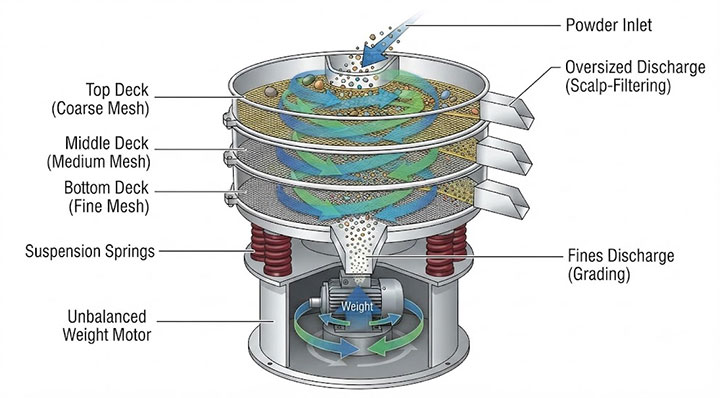
In contrast, rotary vibrating screens (vibro sifters) operate via mechanical vibration powered by an unbalanced motor. Their multi-plane motion forces materials across a physical woven wire mesh. These screens excel at high-capacity grading, scalp-filtering, and removing oversized contaminants or agglomerates from powder streams.
Key Benefits of Combining Both Systems
Integrating air classification with mechanical screening bridges the gap between ultra-fine separation and reliable particle control, unlocking distinct operational advantages.
- Controlling Oversized Particles and Agglomerates: Even advanced fine powder separation systems can occasionally experience minor particle carryover or moisture-induced agglomeration. By integrating a rotary vibrating screen downstream, plant operators establish a reliable safety checkpoint. Any stray coarse particles, foreign debris, or lumps are effectively captured by the physical mesh, helping to prevent them from contaminating the final product.
- Boosting Overall System Yield and Product Purity: Using these two technologies in tandem allows each machine to operate within its optimal efficiency window. The air classifier focuses strictly on extracting the precise fine fraction, while the rotary sifter guarantees strict top-size limits. This dual-action approach minimizes material loss and maximizes overall plant yield while delivering superior product purity.
Configuring Your Line: Upstream vs. Downstream Setup
Depending on raw material characteristics and final product goals, plant engineers can configure these systems in two primary layouts.
Scenario A : Rotary Vibrating Screen as Pre-Classifier (Upstream)
In this layout, raw feed first enters the rotary vibrating screen. The screen acts as an initial scalper to remove heavy debris, oversized particles, and coarse agglomerates before they enter the finer separation circuit. Feeding a pre-cleaned, uniform particle distribution into the fine powder separator helps protect internal components from premature wear and stabilizes the overall classification process.
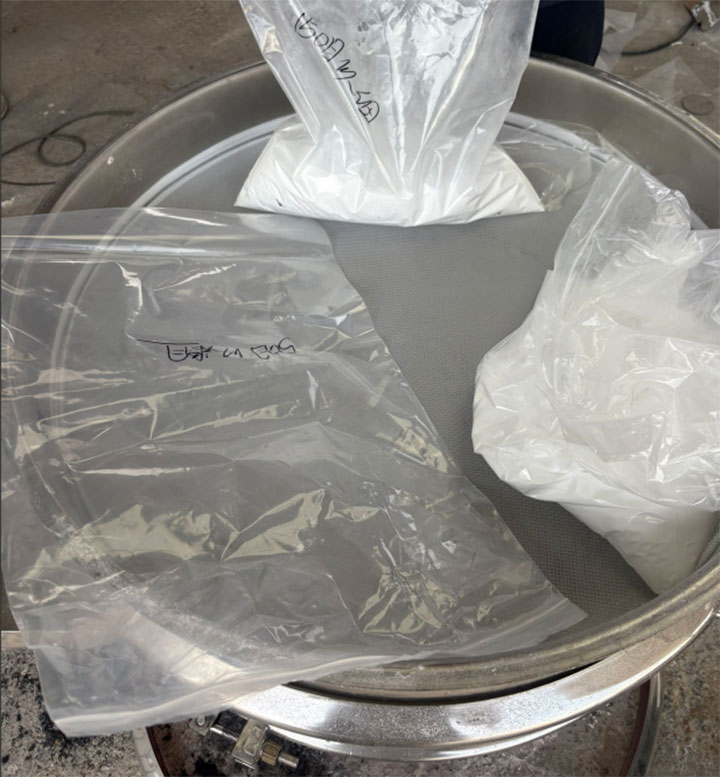
Figure: On-site sample testing of raw powder materials on a rotary vibrating screen mesh before entering the downstream air classification circuit (Scenario A upstream setup).
Scenario B : Rotary Vibrating Screen as Guard/Safety Sifter (Downstream)
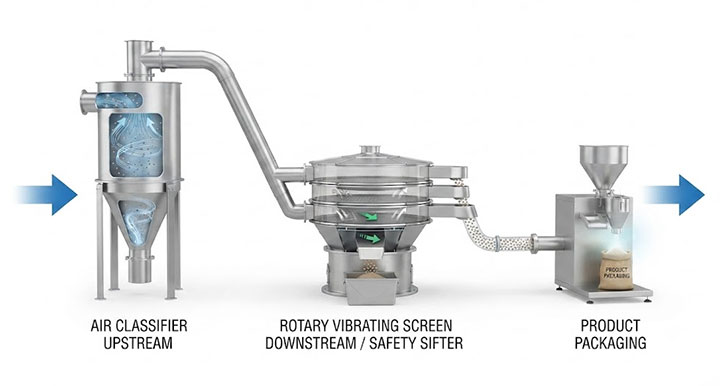
In this configuration, bulk material passes through the fine powder separator first to isolate the ultra-fine target fractions. The finished fine powder is then directed through a high-precision rotary vibrating screen immediately prior to packaging or storage. This downstream setup serves as a final quality assurance gate, helping to ensure the final output remains free from any stray coarse particles or lumps.
Key Factors for Successful Integration in Powder Processing Lines
Successfully merging air separation and mechanical screening requires careful engineering attention to several operational variables.
- Particle Size Range and Cut-point Matching: Engineers must carefully match the cut-point of the air classifier with the appropriate mesh aperture of the rotary screen. Misalignment between the two separation thresholds can lead to overloaded screens or recirculating inefficiencies, which may impact overall line throughput.
- Dust Control and Air-Material Sealing: Because fine powders are prone to dusting and air-handling circuits rely on stable pressure dynamics, connection points, hoppers, and discharge chutes between the separator and the vibrating screen should feature proper gaskets and secure sealing to help maintain a clean operating environment.
Frequently Asked Questions (FAQ)
How do I decide whether to place the rotary vibrating screen upstream or downstream?
Place the rotary screen upstream if your raw material contains heavy debris or coarse lumps that need removal before air classification. Place it downstream as a guard sifter if your main goal is isolating ultra-fine powder first with a final safety check.
Can an integrated air classifier and screening system handle sticky or high-moisture powders?
High-moisture powders cause screen blinding and agglomeration. Raw materials should be dried to a controlled moisture level before processing, and specialized options like ultrasonic screens can help prevent mesh clogging.
What key factors should I look for when choosing an industrial equipment manufacturer?
Evaluate the supplier's customization capabilities for materials and footprints, their provision of material sample testing services, and their engineering and after-sales support.
How can I ensure proper capacity matching when combining an air classifier with a rotary vibrating screen?
To avoid processing imbalances, ensure the throughput capacity of the rotary vibrating screen slightly exceeds the maximum output of the air classifier. Consulting with the manufacturer for a custom workflow design based on your specific bulk density and particle size distribution is also essential.
Finding the Right Equipment for Your Plant
Optimizing a powder processing line requires reliable hardware tailored to specific material properties, throughput targets, and facility space constraints. Whether you need a high-performance rotary vibrating screen for final quality control or comprehensive technical guidance on designing an integrated separation workflow, our technical team will help you select the ideal equipment combination for your production line.