Why Wire Mesh Fragments Escape into Food Powders
Due to mechanical fatigue caused by continuous high-frequency vibration, localized material impact, and tension loss, metal wire mesh fragments can get mixed into food powder. When a single stainless steel wire breaks, high-speed movement quickly destroys adjacent mesh structures, allowing broken wires to pass unnoticed into product streams.

The Root Mechanics of Screen Wire Degradation
Screening woven wire mesh operates under continuous mechanical stress inside a vibrating sifter. In continuous food powder processing lines, wire mesh failure and fragment detachment usually stem from three primary engineering causes:
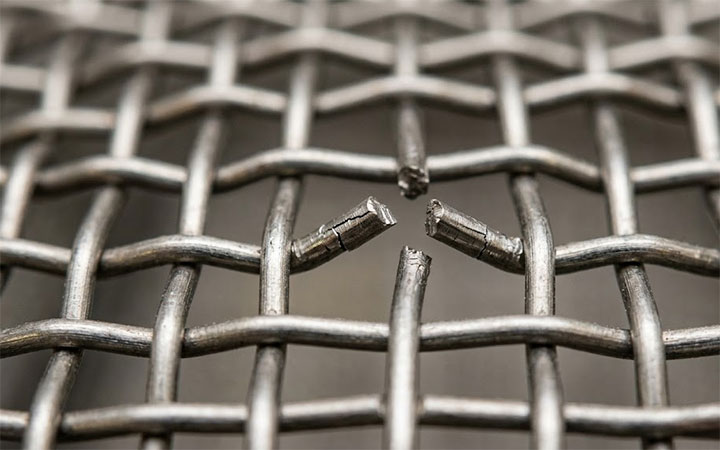
- Work Hardening & Flex Fatigue: High-frequency vibration (typically 1,400 to 3,000 RPM) subjects stainless steel wires (SS304 or SS316L) to millions of micro-bending cycles. Over time, the wire material experiences work hardening, becoming brittle until micro-cracks form and the wire snaps.
- Localized Material Impact: Heavy batch feeding or uneven distribution creates high-stress impact zones on the screen cloth. This localized pressure forces wires to rub against each other at crossover points, thinning the wire diameter and accelerating rupture.
- Ultrasonic Resonance Stress: While ultrasonic de-blinding systems effectively clear sticky food powders, improper frequency tuning or over-tensioned resonance rings can induce localized stress spikes, hastening metal fatigue at the bonding ring.
Active Rupture Detection vs. Passive Magnetic Interception
A complete zero-wire contamination strategy combines active rupture detection with passive magnetic interception. Active rupture sensors continuously monitor screen integrity to automatically halt production upon mesh failure, while downstream high-gauss magnetic separators passively catch microscopic stainless steel fragments before final packaging.
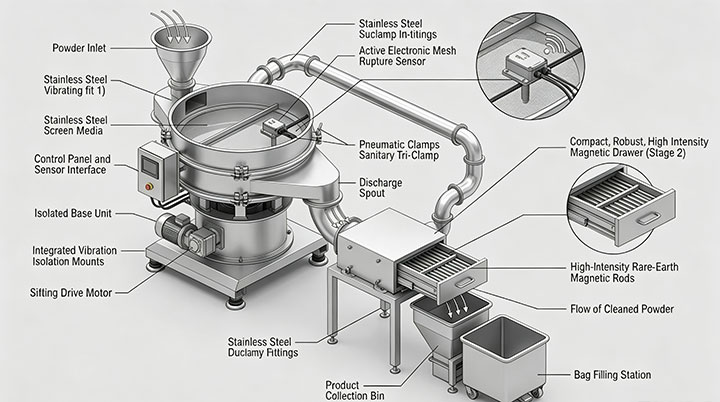
The Need for a Two-Tier Defense Architecture
Relying on a single line of defense creates single-point vulnerabilities in a food powder line. While real-time sensors instantly alert operators to severe mesh tears, microscopic wire slivers can occasionally detach due to localized fatigue before a complete screen rupture occurs. To achieve 100% foreign body prevention under HACCP guidelines, modern processing lines deploy a dual-stage system:
Dual-Stage Protection Logic: Active sensors provide immediate emergency interlocks during complete screen blowouts, while downstream magnetic drawers offer continuous passive trapping for microscopic work-hardened wire slivers before final bag filling.
| Defense Layer | Core Technology | Primary Function | Limitations When Used Alone |
|---|---|---|---|
| Active Rupture Detection | Pneumatic pressure sensing or electrical continuity loops | Instantly stops the machine/feeder when the mesh tears or loses tension | Cannot capture wire fragments that snapped prior to full mesh collapse |
| Passive Magnetic Interception | High-gauss rare-earth Neodymium (NdFeB) magnetic drawers | Continuously attracts and holds work-hardened stainless steel wire slivers | Does not stop material flow; requires routine cleaning to prevent overloading |
By pairing active sensors with high-intensity magnetic traps, food processors ensure that a sudden mesh blowout instantly stops upstream feed, while micro-fragments already in transit are safely captured before reaching the bag filling line.
How Real-Time Mesh Rupture Sensors Work
Real-time mesh rupture sensors operate using pneumatic pressure monitoring or electrical continuity loops. By detecting immediate pressure drops across a dual-layer mesh cavity or broken electrical circuits within the screen ring, these sensors signal the master PLC within milliseconds to shut off upstream material feeders and prevent contaminated powder flow.
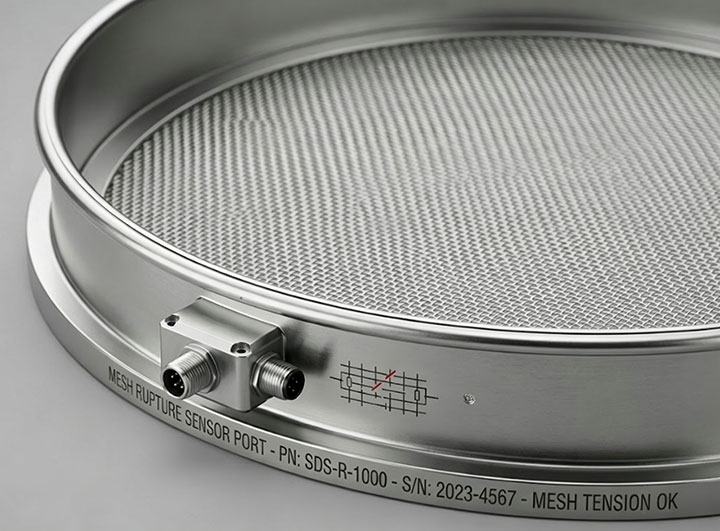
Pneumatic Pressure Sensing (Dual-Layer Cavity System)
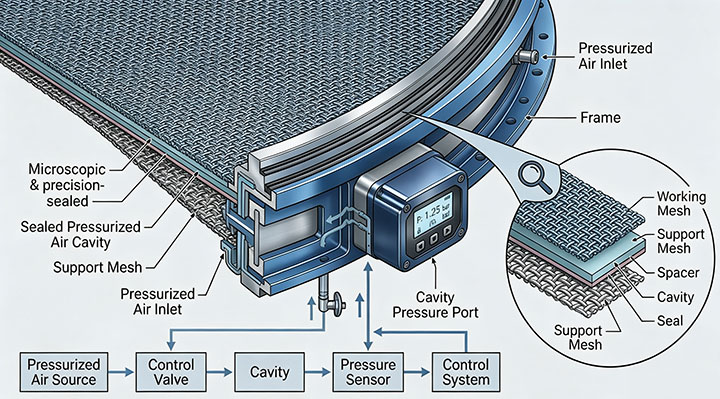
Pneumatic mesh detection is one of the most reliable methods for enclosed food powder processing systems.
- The Dual-Mesh Structure: The screening ring is constructed with two mesh layers sandwiched together, creating a tiny sealed air cavity between the working mesh and the support mesh.
- Constant Pressure Differential: A small pneumatic controller pressurizes this inner cavity to a set level (e.g., 0.2 to 0.5 bar).
- Instant Rupture Signal: When the working mesh suffers a crack or tear, the sealed air cavity depressurizes instantly. A digital pressure switch detects this drop and sends an emergency stop signal directly to the line's PLC, halting upstream conveyors or rotary valves in less than 0.5 seconds.
Electrical Continuity Monitoring (Conductive Ring System)
For high-precision sieving or systems equipped with ultrasonic de-blinding rings, electrical continuity sensing offers an alternative, highly responsive solution.
- Integrated Circuit Loops: Low-voltage, safe monitoring currents are routed through insulated conductive channels embedded within the screen frame and mesh tensioning border.
- Circuit Interruption: Because woven stainless steel mesh maintains electrical continuity across its surface, any structural fatigue that snaps the wire weave breaks the circuit loop.
- Automated Line Interlock: The control box translates the open circuit into an instant fault code, triggering visual/audible plant alarms while automatically closing the pneumatic discharge valve on the vibro sifter.
Selecting the Right Magnetic Separator for Stainless Steel Wires
Capturing cold-worked stainless steel wire fragments (SS304/SS316) requires high-intensity Neodymium (NdFeB) magnetic separators with surface field strengths of 10,000 to 12,000+ Gauss. Standard ferrite magnets fail to trap stainless steel slivers because mechanical fatigue and cold-working provide only weak, paramagnetic properties to broken wire fragments.
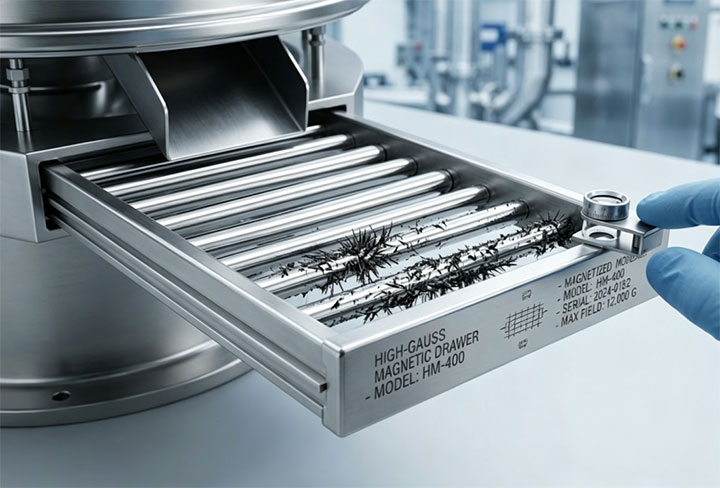
The Physics: Why Standard Magnets Fail with Stainless Steel Wires
A common misconception is that SS304 and SS316L wires cannot be caught by magnets. While non-magnetic in their raw state, continuous flex fatigue in a vibrating screen induces cold-working (austenite to martensite phase change), giving broken wire fragments weak paramagnetic properties. However, pulling these weakly magnetic slivers from a fast-moving powder stream requires high-intensity magnetic force (>=11,000 Gauss)—far beyond the reach of standard 2,000-Gauss iron traps.
| Separator Type | Magnetic Material | Surface Field Strength (Gauss) | Target Contaminant Capability | Recommended Line Location |
|---|---|---|---|---|
| Standard Ferrite Trap | Strontium Ferrite | 1,500 - 3,000 Gauss | Large tramp iron, bolts, nuts, heavy carbon steel | Raw material receiving hoppers |
| Standard Grid Magnet | Low-Grade NdFeB | 7,000 - 9,000 Gauss | Fine iron scale, rust particles, carbon steel shavings | Mid-process gravity drop chutes |
| High-Intensity Magnetic Drawer | High-Grade NdFeB (Rare Earth) | 10,000 - 12,000+ Gauss | Cold-worked SS304 / SS316 wire fragments (< 1mm) | Directly below vibro sifter discharge outlet |
Engineering Tip: For high-speed or dense food powder flows (such as starch or milk powder), always specify an Easy-Clean Dual-Row Magnetic Drawer rated at >=11,000 Gauss. The staggered tube arrangement forces all powder into direct contact with intense magnetic field gradients.
What to Look for in a Sanitary Vibro Sifter
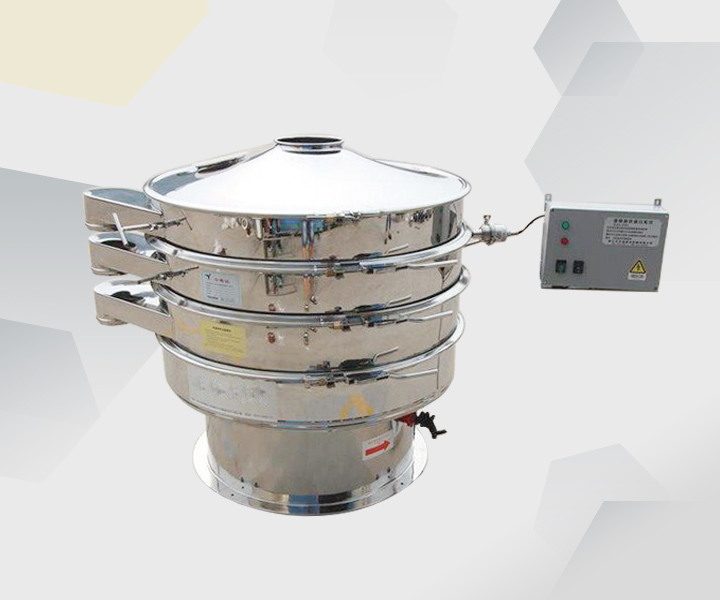
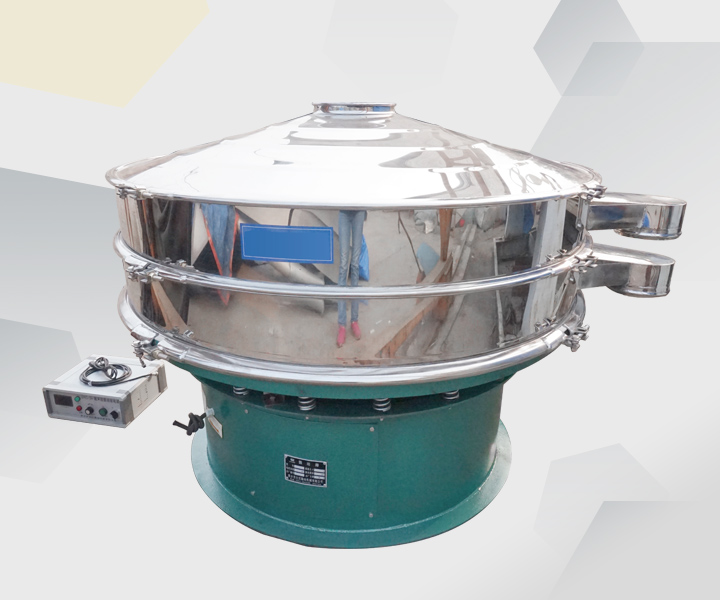
When selecting a sanitary vibro sifter for food powder processing, prioritize 316L stainless steel construction, seamless continuous welds, quick-release clamping rings, and pre-engineered ports for mesh rupture sensors and high-gauss magnetic drawers. These hygienic design features ensure rapid CIP/COP cleaning and full HACCP/FDA compliance.
- Sanitary Contact Materials (SS316L): Ensure all product-contact surfaces are constructed from polished 316L stainless steel with a surface finish of Ra < 0.4um to resist corrosion from aggressive CIP chemicals and food acids.
- Crevice-Free Welds & Gaskets: Avoid spot-welded screen frames that harbor bacterial dead zones. Choose continuous smooth welds and FDA-compliant, metal-detectable silicone gaskets that prevent contamination if seal degradation occurs.
- Quick-Release Tool-Less Clamps: To simplify daily SOPs, select sifters equipped with quick-release band clamps, allowing operators to inspect, clean, and re-tension screen rings without specialized tools.
- Pre-Engineered Sensor & Magnet Integration: Specify a sifter frame that incorporates built-in pneumatic sensor ports and a modular outlet flange sized directly for high-gauss magnetic drawers.
Daily Protocol to Guarantee Zero Wire Contamination
A daily protocol to guarantee zero wire contamination includes sensor alarm testing, shift-based magnetic cleaning, screen tension verification, and scheduled mesh replacements. Following this four-step preventive maintenance checklist ensures continuous HACCP compliance and eliminates mesh failure risks in food powder lines.
Step-by-Step Operating Protocol for Quality Assurance
To prevent broken wire contamination and satisfy strict food safety audits (such as FDA and BRCGS), incorporate this daily maintenance framework into your plant's Standard Operating Procedures (SOP):
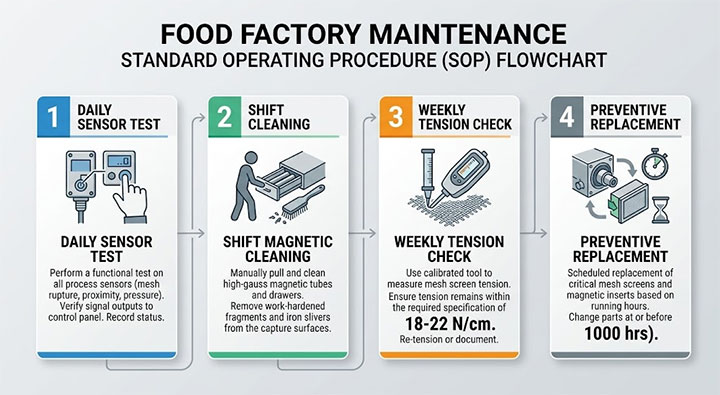
Step 1: Daily Sensor & Interlock Alarm Validation
Before starting each production run, perform a manual signal test on the mesh rupture detection sensor. Confirm that the sensor trip signal immediately sends an interlock command to the line's PLC, stopping the upstream feeding valve in less than one second.
Step 2: Shift-Based Cleaning of Magnetic Drawers
Inspect and clean downstream high-gauss magnetic tubes at the end of every operating shift. Pull the magnetic drawer out, wipe away accumulated particles into a collection tray, and log captured metal fragments in your Quality Control (QC) tracking sheet.
Step 3: Periodic Mesh Tension Checks (18-22 N/cm)
During weekly maintenance, measure screen cloth tension using a digital pneumatic tension meter. Properly tensioned food-grade screens should maintain a range of 18-22 N/cm. Under-tensioned screens flex excessively under vibration, accelerating wire fatigue by up to 3x.
Step 4: Scheduled Preventive Mesh Replacement
Establish a strict operating-hour lifecycle limit for woven wire screens (e.g., replacing screen rings every 1,000 operating hours). Do not wait for a mesh rupture to occur before replacing the screen cloth.
Upgrade Your Food Powder Line
Mitigating broken wire risks requires moving away from reactive manual checks toward an automated, dual-tier defense system. Combining real-time screen rupture monitoring with high-intensity magnetic interception guarantees complete product safety and audit readiness.
Explore our vibratory sifters for food processing to evaluate available configurations, sanitary design features, and throughput options tailored for powder processing lines. You can also send your food powder samples to our testing lab for a complimentary screening efficiency and mesh tension evaluation, or speak directly with an application engineer to customize your protection system.