Industrial Salt Vibro Sifter for Sale: High Efficiency & Anti-Corrosive
Saturday July-25 2026 09:35:24
In industrial salt processing, achieving consistent particle size while maintaining continuous production is a significant challenge. Salt is highly corrosive, abrasive, and hygroscopic (moisture-absorbing). Standard sieving equipment often suffers from rapid wear, grid blinding, and premature mechanical failure when handling this demanding material.
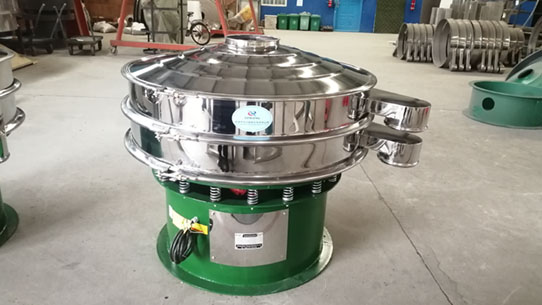
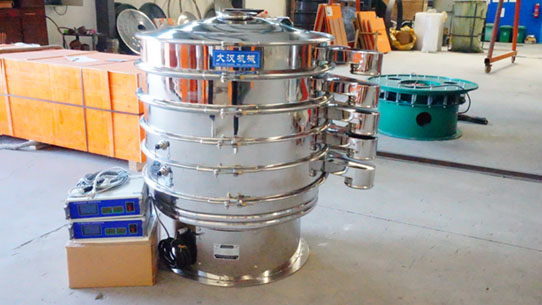
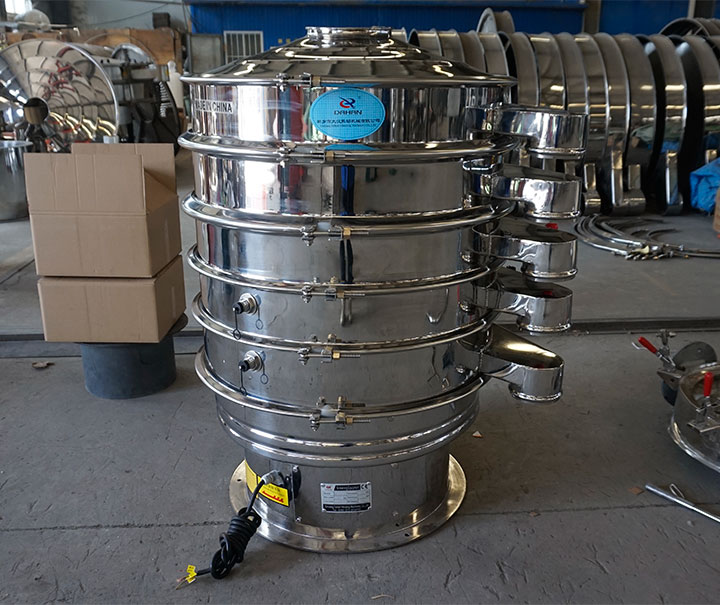
If you are looking to optimize your production line, our heavy-duty Industrial Salt Vibro Sifter is now available for sale. Engineered specifically for salt refineries and food processing plants, this machine combines exceptional screening efficiency with advanced structural protection against harsh chemical environments.
Why Standard Sifters Fail in Salt Processing
Before investing in screening machinery, it is crucial to understand the distinct physical properties of salt that affect equipment longevity:
Chemical Corrosion
When salt absorbs ambient moisture, it forms a highly corrosive electrolyte solution. This rapidly rusts standard carbon steel and even low-grade stainless steel (like SS304) under continuous mechanical stress.
Mesh Blinding and Clogging
Fine salt particles easily agglomerate due to humidity and static electricity. This causes the screen openings to clog, drastically reducing hourly throughput and requiring frequent manual cleaning.
Abrasive Wear
Constant high-speed friction from sharp salt crystals accelerates the wear and tear of the sieve mesh, leading to broken wires and potential product contamination.
Our specialized salt vibratory separator addresses these industry challenges through target-driven engineering, premium material selection, and strict compliance with international manufacturing standards.
Advanced Technical Working Principle
Understanding how our industrial salt vibro sifter operates helps explain its high efficiency and reliability during round-the-clock operations.
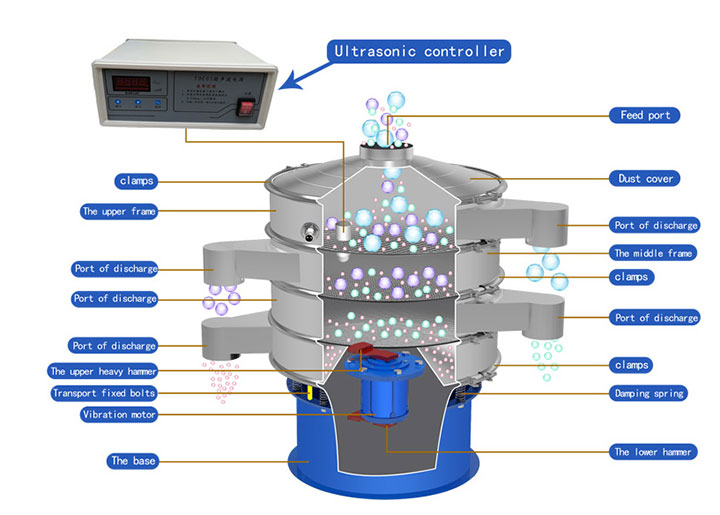
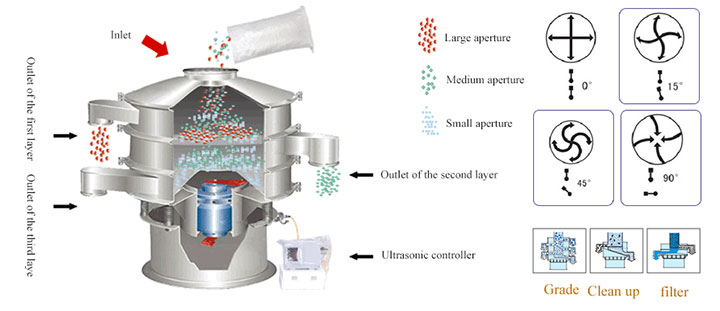
The machine utilizes a high-performance vertical vibration motor as its primary motion source. This specialized motor features adjustable eccentric weights installed on both the upper and lower ends of the shaft:
Three-Dimensional Motion
The rotation of the top weight generates horizontal, circular vibrations, forcing the salt to spread outwards from the center of the screen mesh. Simultaneously, the bottom weight creates vertical and inclined vibrations, causing the salt crystals to tumble across the screen surface.
Continuous Layering and Grading
This 3D motion ensures that every single salt particle comes into contact with the mesh. Oversized lumps and foreign impurities remain on top and are directed to the upper discharge spout, while accurately sized salt particles pass through to the lower decks.
Continuous Discharge
The structural design allows materials to be processed automatically in a closed loop, fitting seamlessly into automated production lines without causing bottlenecks.
Key Features That Ensure Long-Term Value
To provide global buyers with a durable solution, our industrial salt vibro sifter incorporates several critical engineering upgrades:
Superior Corrosion Resistance (SS316L Construction)
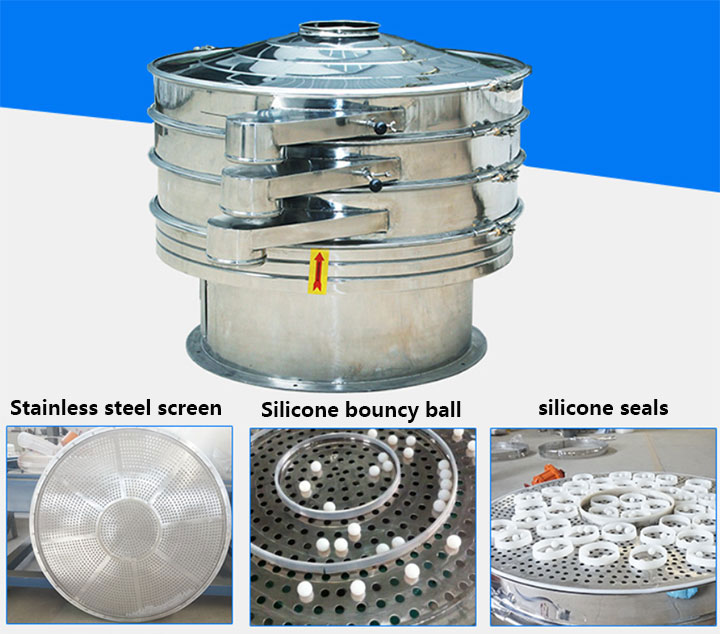
All components that come into direct contact with the process material are fabricated from premium SS316L stainless steel. This specific grade contains Molybdenum, which offers excellent resistance to chloride pitting and stress corrosion cracking. This ensures the machine maintains structural integrity over years of contact with wet or dry salt.
High-Efficiency Anti-Blinding Systems
To prevent screen clogging and maintain consistent throughput, we provide two proven mechanical solutions:
Food-Grade Bouncing Balls: Positioned on a tray beneath the screen mesh, these FDA-compliant silicone balls continuously bounce against the screen during operation, knocking loose any trapped salt crystals.
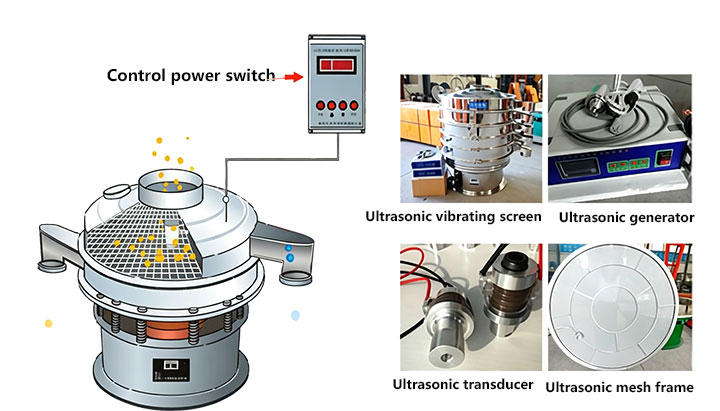
Ultrasonic Deblinding System (Optional Upgrade): For ultra-fine salt powder, an ultrasonic transducer transmits high-frequency waves across the mesh. This eliminates surface tension and static attraction, ensuring the screen remains fully open.
Fully Enclosed, Dust-Proof Design
The entire unit features a tightly sealed construction with food-grade silicone gaskets. This prevents fine salt dust from escaping into the workshop environment, protecting factory air quality and shielding external drive components from corrosive dust accumulation.
Technical Specifications
The following table highlights the standard configurations available for our industrial salt vibro sifter series. Custom modifications can be engineered based on specific factory layouts and capacity requirements.
| Model | Diameter (mm) | Sieve Layers | Mesh Sizes Supported | Motor Power (kW) | Material of Construction |
|---|---|---|---|---|---|
| DH-600 | 600 | 1 - 3 Decks | 2 mesh to 500 mesh | 0.25 | Contact parts SS316L / Base Carbon Steel |
| DH-1000 | 1000 | 1 - 4 Decks | 2 mesh to 500 mesh | 0.75 | Contact parts SS316L / Base Carbon Steel |
| DH-1200 | 1200 | 1 - 4 Decks | 2 mesh to 400 mesh | 1.10 | Fully SS316L (Optional) |
| DH-1500 | 1500 | 1 - 3 Decks | 2 mesh to 300 mesh | 1.50 | Fully SS316L (Optional) |
Applications Across the Salt Industry
Our high-capacity vibratory separators are versatile and can be configured for various stages of processing:
Edible and Table Salt: Precise grading to meet strict commercial size standards while ensuring zero product contamination.
Sea Salt Harvesting: Efficient removal of large debris, sand, and uncrushed crystals directly after harvesting.
Industrial and Road Salt: High-volume screening to eliminate oversized clumps, ensuring smooth flow in downstream distribution systems.
Chemical-Grade Salt: Fine separation for specialized industrial applications requiring exact particle distributions.
Real-World Case Study: Lifespan Tripled
A salt refining plant in Southeast Asia previously utilized standard SS304 vibrating screens. Due to high humidity and severe salt corrosion, the screens required mesh replacement every 3 weeks, causing costly plant downtime.
After retrofitting our SS316L Industrial Salt Vibro Sifter equipped with an integrated ultrasonic deblinding system, their production line achieved uninterrupted 24/7 operation. The mesh lifespan was extended to over 8 months, significantly lowering maintenance costs and boosting overall plant profitability.
Frequently Asked Questions (FAQ)
What is the difference between SS304 and SS316L for salt sieving?
While SS304 is rust-resistant for general food processing, it quickly corrodes when exposed to chlorine ions in salt. SS316L contains Molybdenum, which specifically prevents chloride pitting and extends the machine’s lifespan in highly corrosive salt environments.
How often should the screen mesh of a salt sifter be replaced?
It depends on the salt's abrasiveness and operation hours. Typically, with our anti-blinding bouncing balls and reinforced mesh design, the screen can last 6 to 12 months under standard industrial use.
Can this vibratory separator handle wet sea salt?
Yes. Our Industrial Salt Vibro Sifter can be customized with high-torque motors and heavy-duty meshes specifically calibrated to discharge sticky, wet sea salt without liquid accumulation or motor overloading.
Do you support material testing before purchase?
Absolutely. As a customer-centric manufacturer, we encourage buyers to ship a sample of their raw salt to our laboratory. Our engineering team will conduct a free material analysis and test-run it on our Salt Vibro Sifter to determine the optimal mesh size, motor power, and anti-blinding configuration for your specific capacity targets.