Sugar Vibro Sifter: Ultimate Guide to Sugar Screening
Saturday July-25 2026 09:27:22
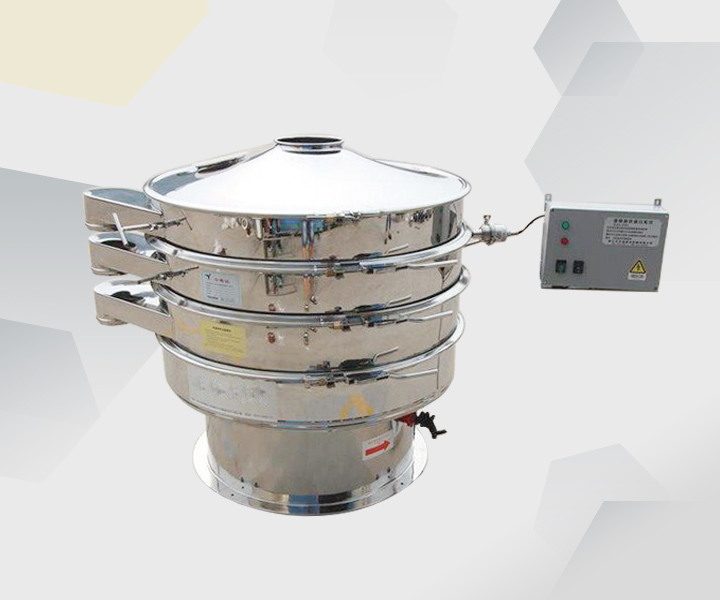
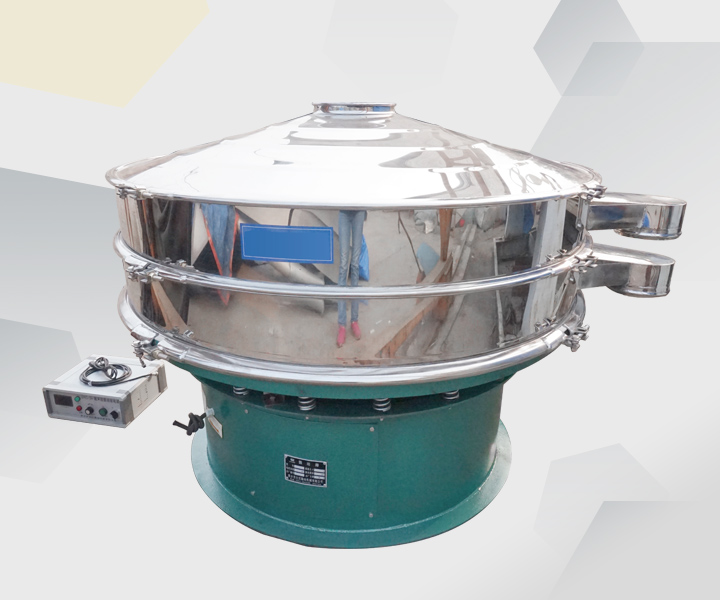
Based on our years of engineering experience in designing sanitary food machinery, maintaining product purity and consistent particle size in sugar refining is a multi-million-dollar priority. Among the essential equipment safeguarding this quality is the sugar vibro sifter.. Among the essential equipment safeguarding this quality is the sugar vibro sifter. This mechanical separator utilizing three-dimensional vibratory motions plays a critical role in sifting, grading, and de-dusting different forms of sugar, including granulated sugar, refined white sugar, and fine icing sugar.
This ultimate guide explores the operational principles, technical specifications, food-safety configurations, and maintenance strategies for sugar vibro sifters, providing procurement managers and production engineers with the insights needed to optimize their sugar processing lines.
What is a Sugar Vibro Sifter?
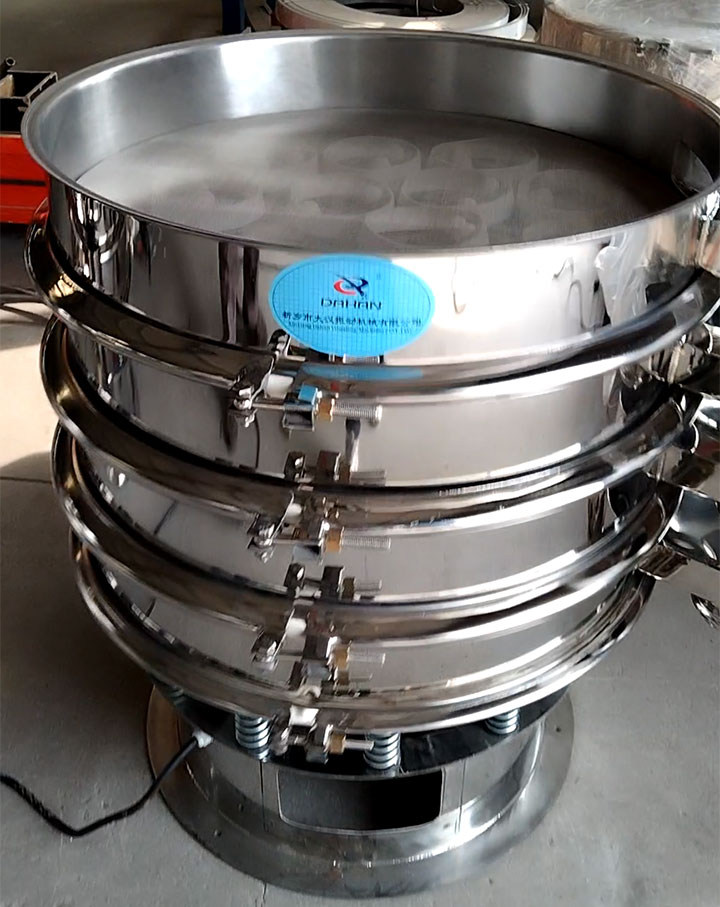
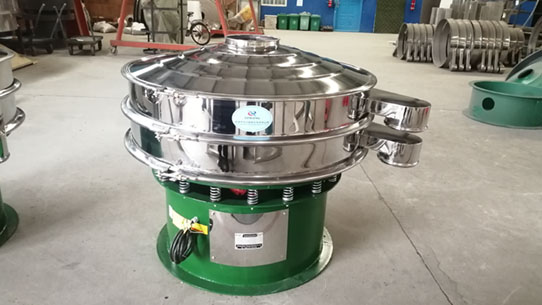
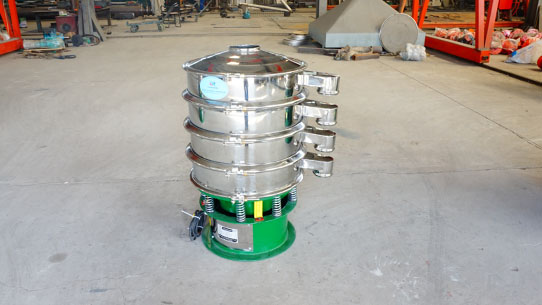
A sugar vibro sifter, widely recognized in the solids-handling industry as a rotary vibrating screen or circular vibratory separator, is a high-precision screening machine designed to separate materials by particle size.
When integrated into a food production line, it acts as a safety checkpoint. It removes over-sized lumps, foreign contaminants (such as packaging fibers or threads), and under-sized dust from the main product stream. Because sugar is highly hygroscopic(moisture-absorbing) and prone to agglomeration, a dedicated vibro sifter is indispensable for ensuring the free-flowing characteristics demanded by commercial packaging and subsequent food manufacturing processes.
Working Principle of Three-Dimensional Vibratory Separators
The mechanical efficiency of a sugar vibro sifter relies on its specialized vibratory drive mechanism. Understanding this process helps production teams fine-tune the equipment for various sugar types.
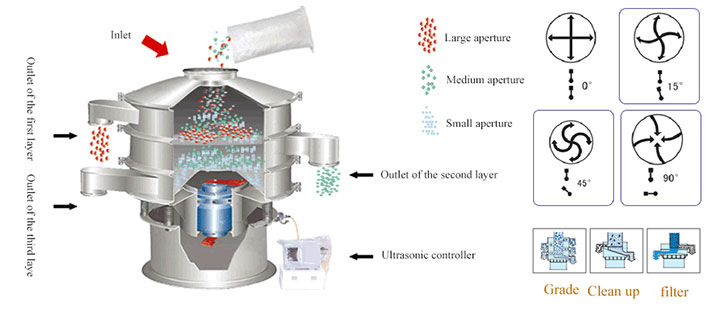
The Motor and Eccentric Weights
At the core of the sifter is a vertical vibration motor equipped with adjustable eccentric weights at both the top and bottom ends of the motor shaft. As the motor rotates, these weights generate an unbalanced centrifugal force.
The Three-Dimensional Motion
This force is transmitted to the screen frame, causing the screening deck to move in three distinct planes simultaneously:
Horizontal Motion: Moves the sugar particles from the center toward the periphery of the mesh.
Vertical Motion: Tosses the sugar slightly upward, preventing the crystals from blinding or wedging into the mesh openings.
Inclined/Tilted Motion: Controls the velocity and spiral path of the material across the screen surface.
By adjusting the lead angle of the bottom eccentric weight relative to the top weight, operators can alter the spiral pattern of the sugar on the mesh. A longer retention time ensures maximum screening accuracy, whereas a faster outward movement increases the overall throughput capacity.
Strict Sanitary Standards for Food-Grade Sugar Sifters
Unlike industrial vibratory screens used in mining or chemical processing, a sugar vibro sifter must adhere to rigorous sanitary and food-safety regulations, such as those established by the FDA and EHEDG.
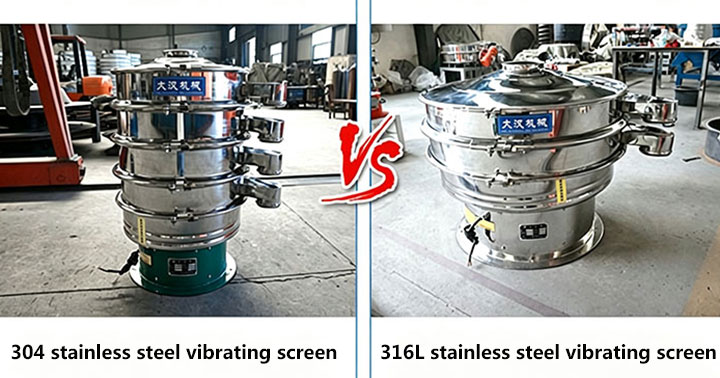
Material Selection: Stainless Steel 304 vs. 316L
Every component coming into direct contact with the sugar must be fabricated from high-grade stainless steel.
Stainless Steel 304: The standard choice for dry granulated sugar screening, offering excellent corrosion resistance and structural durability.
Stainless Steel 316L: Preferred for applications involving highly humid environments or where the sugar is blended with slightly acidic or corrosive additives.
Surface Treatment and Welding
The internal and external surfaces of the sifter undergo meticulous mirror-polishing, achieving a surface roughness ($Ra$) of less than 0.4 microns. All joints must be fully welded and ground smooth. This eliminates dead zones, crevices, or rough pockets where sugar dust could accumulate, attract moisture, and cultivate microbial growth or bacterial contamination.
Food-Grade Seals and Gaskets
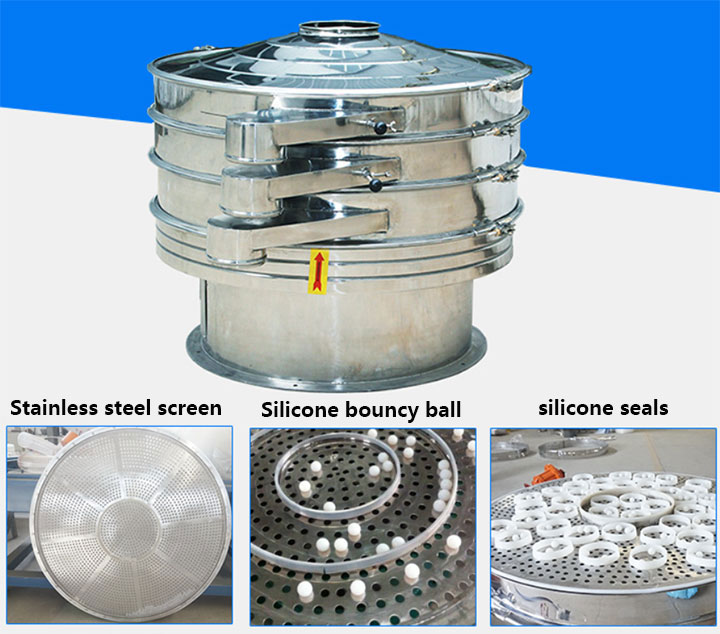
To prevent external dust from entering the system and to stop fine sugar powder from escaping into the factory atmosphere, high-quality seals are installed between the screening decks. These gaskets and O-rings are made from food-grade silicone, EPDM, or PTFE that comply with FDA standards. Non-food-grade black rubber is strictly avoided due to the risk of chemical leaching and product contamination.
Key Challenges in Sugar Screening and Technical Solutions
Screening sugar presents unique physical challenges that can compromise production efficiency if not addressed by proper engineering configurations.
Mesh Blinding and Clogging
Because sugar is inherently sticky and sensitive to ambient humidity, fine particles can easily lodge themselves inside the wire mesh openings. This phenomenon, known as mesh blinding, drastically reduces the effective screening area and throughput.
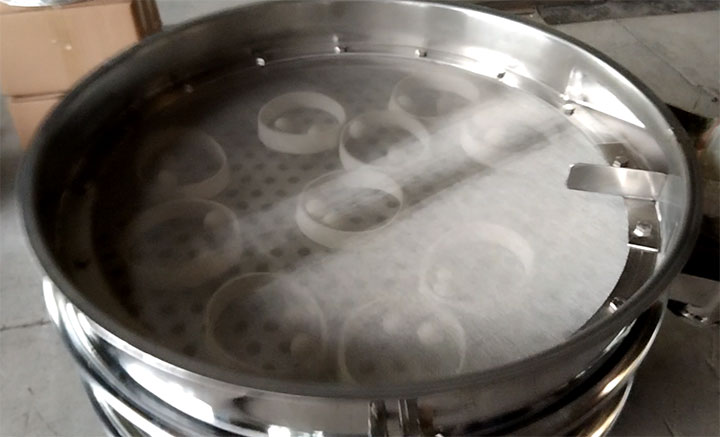
Solution - Bouncing Balls: A perforated sub-deck is installed beneath the active screening mesh, containing food-grade silicone bouncing balls. As the machine vibrates, these balls constantly strike the underside of the mesh, dislodging stuck sugar crystals and keeping the screen open.
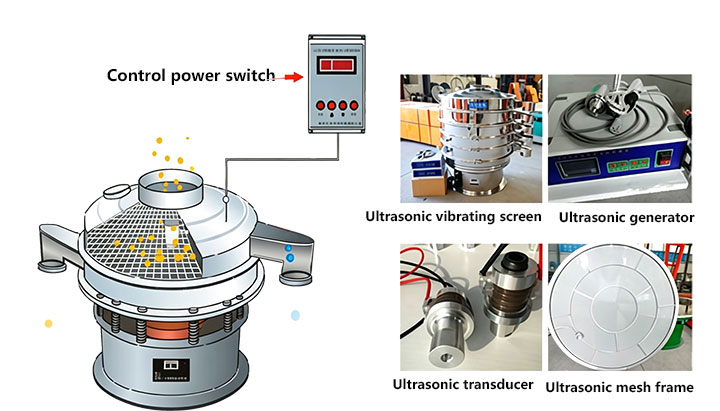
Solution - Ultrasonic Cleansing Systems: For extremely fine icing sugar (powdered sugar), mechanical bouncing balls may not suffice. An ultrasonic generator transmits high-frequency electrical waves converted into longitudinal mechanical vibrations directly to the mesh wire. This breaks the electrostatic bonds and surface tension between the fine sugar particles and the stainless steel wire, allowing seamless screening of powders down to 500 mesh without blinding.
Dust Explosions in Powdered Sugar Handling
Finely divided sugar dust suspended in the air within an enclosed space creates a highly combustible atmosphere. A tiny electrical spark from a standard motor can trigger a devastating dust explosion.
Solution - ATEX/Ex-Proof Motors: For any application involving fine sugar powder or icing sugar grading, the vibro sifter must be equipped with an explosion-proof (Ex-proof) motor certified under global ATEX or IECEx standards. All electrical connections must be safely isolated to prevent ignition risks.
Technical Specifications and Selection Matrix
Selecting the appropriate model depends on your processing capacity requirements and the specific form of the sugar. The following reference matrix outlines typical configurations used in commercial sugar processing:
| Sugar Type | Mesh Size | Anti-Blinding Device | Motor Requirement | Primary Objective |
|---|---|---|---|---|
| Raw / Brown Sugar | 2000 μm - 4000 μm | Heavy-duty PU Bouncing Balls | Standard IP55 Motor | Removing coarse lumps & debris |
| Granulated Sugar | 400 μm - 800 μm | Silicone Bouncing Balls | Food-grade Standard Motor | Particle size grading & uniformity |
| Fine Sugar Powder | 100 μm - 250 μm | Ultrasonic System | ATEX/Ex-Proof Certified | De-dusting & fine classification |
| Icing Sugar | Below 75 μm | Ultrasonic System + Sliders | ATEX/Ex-Proof Certified | Ultra-fine safety sifting |
Preventive Maintenance and Operation Best Practices
To ensure a long operational lifespan and consistent screening efficiency, production teams should implement a routine maintenance protocol.
Daily Inspection of Mesh Tension: A loose screen mesh will flex excessively under the weight of the sugar, leading to rapid metal fatigue and premature tearing. Ensure the clamping rings are tightened securely to maintain optimum mesh tension.
Sanitary Washdowns: When switching production batches or during scheduled shutdowns, the sifter should be thoroughly cleaned. Thanks to quick-release V-clamps, modern sugar vibro sifters can be disassembled without tools within minutes, allowing operators to wash down the stainless steel decks and sanitize the screens.
Motor Lubrication: The upper and lower bearings of the vibration motor must be lubricated with food-grade grease at intervals specified by the manufacturer to prevent overheating and mechanical failure.
Frequently Asked Questions (FAQ)
Can a sugar vibro sifter handle both wet and dry sugar?
Standard vibro sifters are optimized for dry, free-flowing granulated or powdered sugar. If you need to handle liquid sugar or sugar syrups, the machine must be re-configured with a liquid-solid separator design and high-tension mesh to prevent liquid blinding.
How often should the sieve mesh be replaced?
In a continuous 24/7 production line, a high-quality stainless steel mesh typically lasts between 3 to 6 months. However, this depends on the sugar abrasiveness and feeding volume. Daily inspection of tension rings is highly recommended.
What is the lead angle, and how does it affect sugar sifting?
The lead angle is the relative position between the top and bottom eccentric weights. For sugar screening, a 15 to 45-degree lead angle is standard, ensuring the sugar spirals outward at an optimal speed for maximum accuracy without piling up.